




What's Happening?
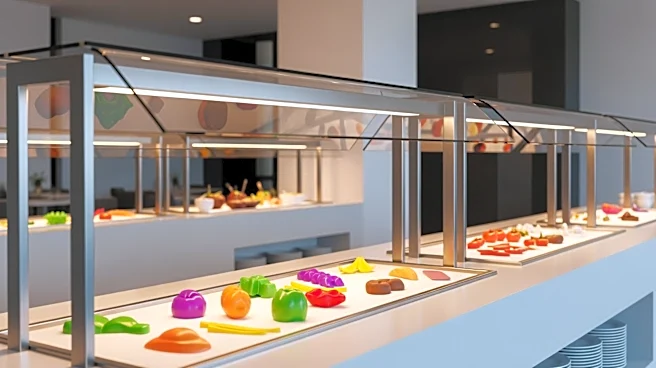
Buffets are undergoing a transformation in the foodservice industry, becoming a strategic centerpiece that combines profitability with enhanced guest experiences. Traditionally known for their volume-driven approach, buffets are now being reimagined with flexible,
design-driven platforms that adapt to changing menus, labor realities, and sustainability goals. Operators are moving away from the all-you-can-eat model, opting for curated presentations and hybrid formats that blend self-service with chef-led stations. This shift is driven by labor challenges, requiring buffets to be redesigned to reduce friction while maintaining guest engagement. Innovations such as induction warming, modular layouts, and battery-powered systems are replacing labor-intensive setups, allowing for more efficient operations.
Why It's Important?
The evolution of buffets is significant for the foodservice industry as it addresses several critical challenges, including labor shortages and sustainability concerns. By adopting smart design and technology, operators can reduce labor touchpoints and energy consumption, making buffets more sustainable and cost-effective. This transformation also enhances the dining experience, offering guests a more intentional and varied selection of food. The ability to adapt menus quickly and incorporate global flavors and seasonal ingredients keeps offerings fresh and appealing. As buffets become more experience-driven, they serve as a powerful tool for operators to differentiate themselves in a competitive market, potentially increasing customer satisfaction and loyalty.
What's Next?
As buffets continue to evolve, operators are expected to further integrate technology and sustainable practices into their strategies. The focus will likely be on creating more interactive and customizable dining experiences, blending self-service with live cooking stations. This approach not only enhances guest engagement but also allows for greater flexibility in menu offerings. Operators will need to ensure that their buffet systems are aligned with culinary, operational, and design elements to deliver consistency and efficiency. The ongoing development of eco-friendly and modular equipment will support these efforts, enabling buffets to operate in diverse environments and adapt to various service styles.