





What's Happening?
The Museum of Modern Art (MoMA) in Manhattan is set to host an exhibition titled 'Mondrian Boogie Woogie' from March 21 to July 31, 2027. This exhibition will explore the Dutch artist Piet Mondrian's work during his time in New York and the influence
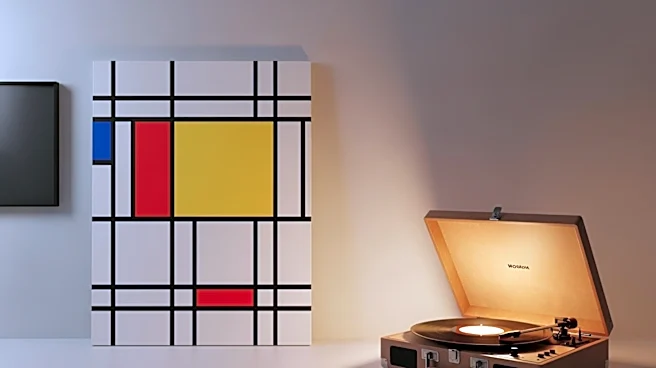
of boogie woogie music on his art. It will feature Mondrian's two final paintings, 'Broadway Boogie Woogie' and 'Victory Boogie Woogie,' reunited for the first time in over three decades. These works, which capture the rhythm and energy of boogie woogie music, are significant as they represent the largest canvases Mondrian used for abstract painting. The exhibition will also delve into the cultural and historical context of Mondrian's migration to New York as a European refugee and the concurrent migration of the Black diaspora from the Jim Crow South to the Northeast in the 1940s.
Why It's Important?
This exhibition is significant as it sheds light on the lesser-known influences of New York and Black culture on Mondrian's work, offering a fresh perspective on his artistic legacy. By focusing on the cultural exchanges and historical migrations of the 1940s, the exhibition highlights the interconnectedness of art, politics, and social movements. It also underscores the role of boogie woogie music as a symbol of freedom and expression, which Mondrian embraced in his work. The reunion of 'Broadway Boogie Woogie' and 'Victory Boogie Woogie' is a rare event, given the logistical challenges of securing loans for artworks considered national patrimony. This exhibition not only celebrates Mondrian's contributions to modern art but also invites viewers to reconsider the narratives surrounding his work and its relevance to contemporary discussions on freedom and cultural exchange.
What's Next?
Following its run at MoMA, the exhibition will open at the Kunstmuseum Den Haag in September 2027. This continuation will allow a broader audience to engage with Mondrian's work and the themes explored in the exhibition. The collaboration between MoMA and the Kunstmuseum Den Haag, along with other cultural institutions, highlights the importance of international partnerships in the art world. The exhibition is expected to inspire further scholarly research and public interest in Mondrian's work and the cultural dynamics of the 1940s. Additionally, the inclusion of a performance by jazz pianist Jason Moran, inspired by the exhibition's theme, suggests a multidisciplinary approach to understanding and experiencing art.
Beyond the Headlines
The exhibition offers an opportunity to explore the ethical and cultural dimensions of art as a form of resistance and expression. Mondrian's engagement with boogie woogie music and his writings during this period reflect his political and philosophical positions on freedom and oppression. By examining these aspects, the exhibition encourages a deeper understanding of the role of art in challenging societal norms and advocating for change. It also prompts reflection on the historical and ongoing impact of migration and cultural exchange on artistic innovation. The exhibition's focus on Mondrian's interactions with New York's first interracial nightclub, Café Society, further emphasizes the intersection of art and social justice.