





What's Happening?
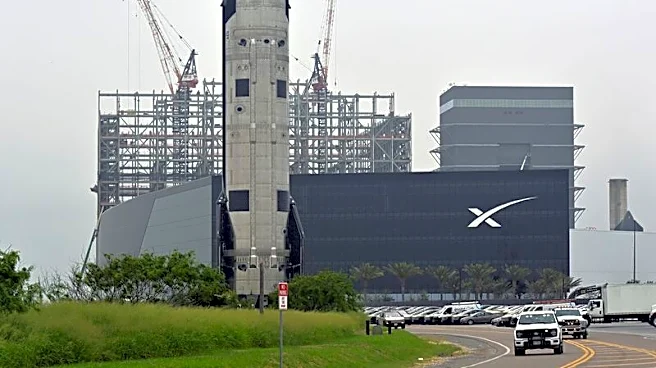
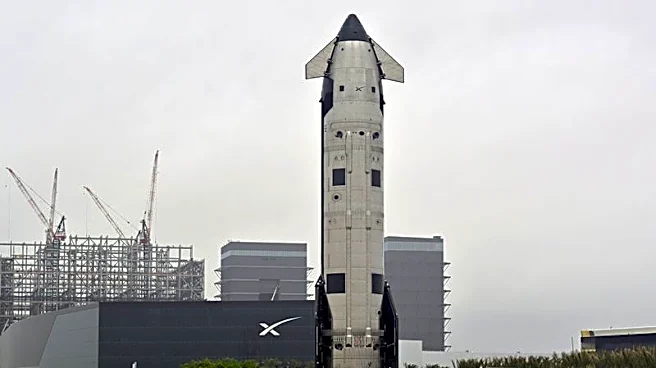
SpaceX, the aerospace company founded by Elon Musk, has filed paperwork for what could become the largest initial public offering (IPO) in history. The company is expected to raise approximately $80 billion, potentially valuing it at over $1 trillion.
This move would make SpaceX one of the most valuable companies globally, surpassing even Tesla, Musk's electric vehicle company. The IPO is anticipated to occur in mid-June, following confidential filings with the U.S. Securities and Exchange Commission earlier this year. SpaceX's business model includes launching defense satellites, commercial payloads, and astronauts, with significant revenue also coming from its Starlink satellite internet service.
Why It's Important?
The IPO of SpaceX is significant as it could set a new benchmark for public offerings, potentially revitalizing a sluggish IPO market. It also highlights the growing importance of private space companies in global markets. SpaceX's valuation is heavily tied to Elon Musk's vision and leadership, which could influence investor confidence. The company's dominance in satellite launches and its expansion into satellite internet services through Starlink underscore its strategic importance in the aerospace and telecommunications sectors. However, the IPO also brings risks, as public scrutiny and regulatory oversight could impact the company's operations and valuation.
What's Next?
As SpaceX prepares for its IPO, the company will likely face increased scrutiny from financial regulators and the public. Investors will be keen to see how SpaceX manages its diverse business operations, including its loss-making rocket and AI divisions. The IPO could also influence other tech companies considering public offerings, such as OpenAI and Anthropic. The success of SpaceX's IPO could encourage more investments in the space industry, potentially leading to further innovations and expansions in satellite technology and space exploration.