
What's Happening?
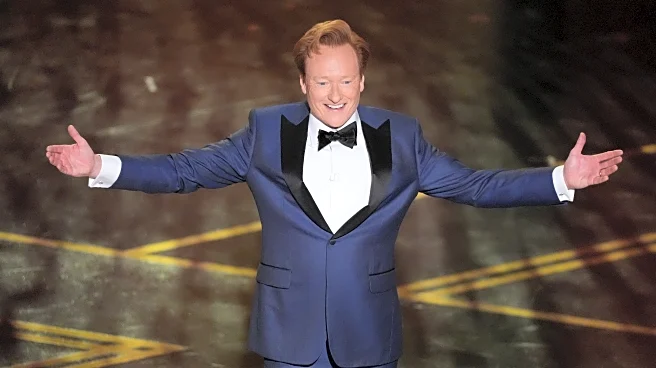
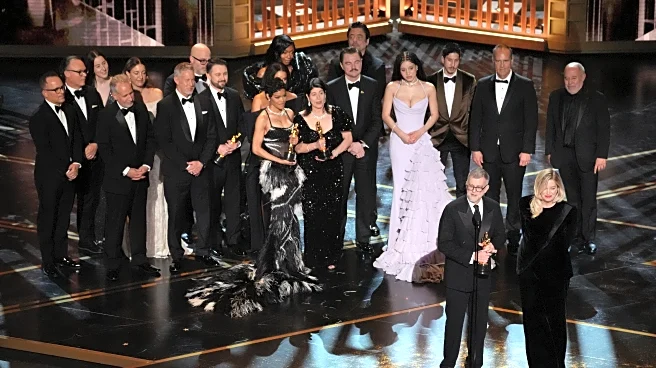
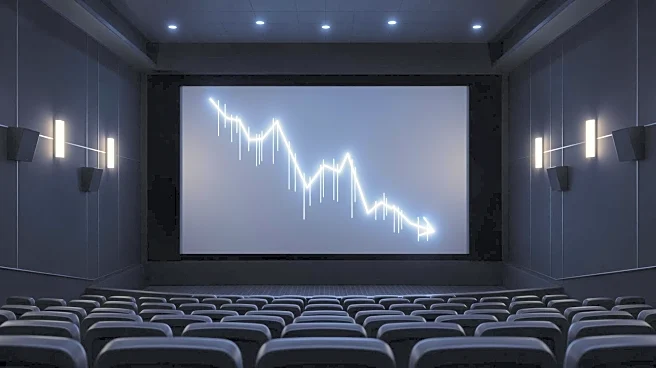
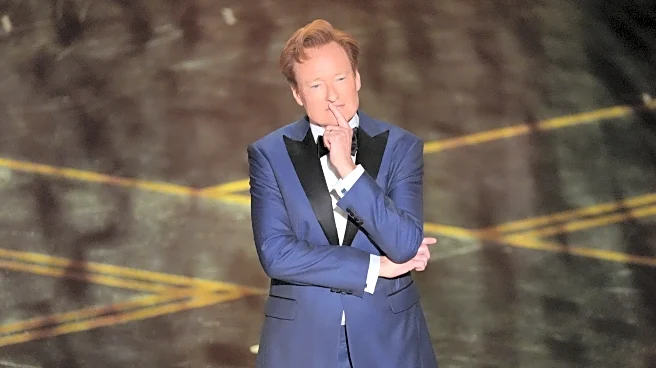
The 2026 Oscars telecast, hosted by Conan O'Brien at the Dolby Theatre in Hollywood, drew 17.9 million viewers, marking a 9% decline from the previous year. The ceremony honored 'One Battle After Another' as Best Picture, with Michael B. Jordan winning
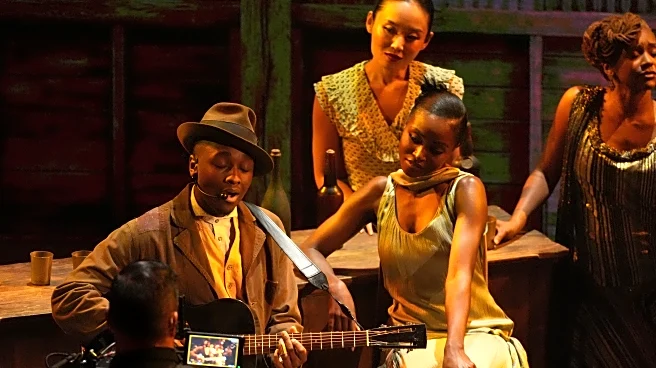
Best Actor for 'Sinners' and Jessie Buckley as Best Actress for 'Hamnet.' The event was noted for its lack of political statements, particularly regarding President Trump, and featured an extended 'In Memoriam' segment. Despite the viewership drop, ABC successfully sold out commercial spots, maintaining the Oscars as the most-watched non-sports telecast of the year.
Why It's Important?
The decline in Oscars viewership reflects broader trends in media consumption, with younger audiences favoring social media highlights over lengthy TV broadcasts. This shift challenges traditional networks like ABC, which depend on high ratings for advertising revenue. The Oscars' continued cultural relevance is evident in its status as the top non-sports telecast, but the move to YouTube in 2029 suggests a strategic pivot to digital platforms. The event's ability to sell out ad spots indicates sustained advertiser interest, highlighting the Oscars' enduring appeal despite changing viewer habits.
What's Next?
The Academy's decision to move the Oscars telecast to YouTube in 2029 signals a significant shift in how major events are broadcast, potentially influencing other award shows. As digital platforms gain prominence, traditional networks may need to innovate to retain viewership. ABC's current contract for the Oscars runs for two more years, during which time the network will likely explore strategies to engage younger audiences. The transition to YouTube could also open new opportunities for interactive and on-demand viewing experiences, aligning with evolving consumer preferences.