
What's Happening?
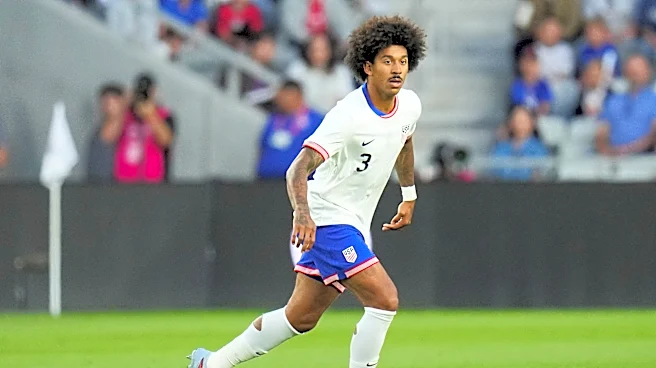
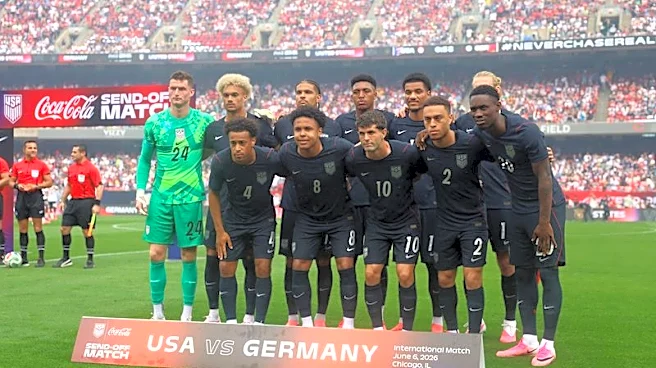
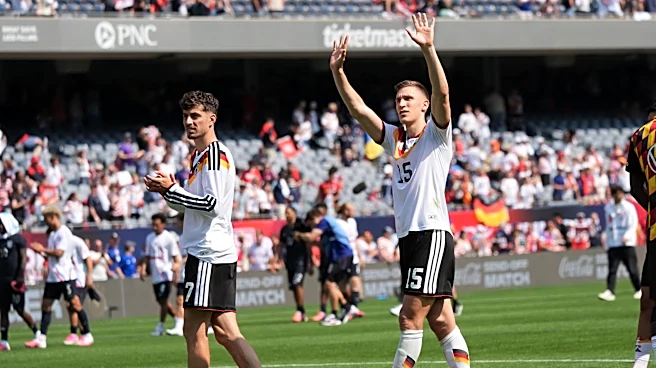
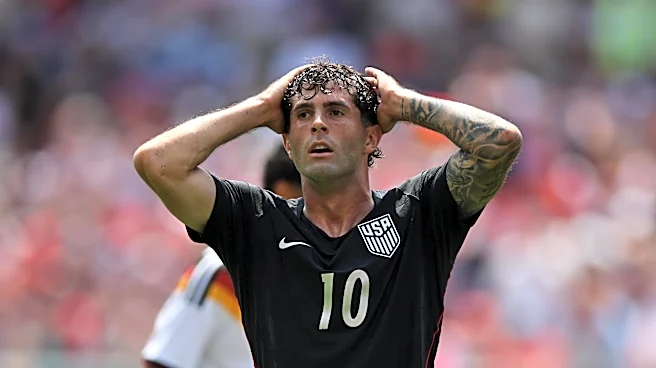
The United States men's national soccer team faced a 2-1 defeat against Germany in their final preparation match before the World Cup. The match took place at Soldier Field in Chicago, drawing a sellout
crowd of 63,636. Germany's Kai Havertz opened the scoring with a header from a free kick in the second minute. The U.S. equalized in the 37th minute with a left-foot volley by Antonee Robinson, following a corner kick by Christian Pulisic. However, Germany regained the lead in the 57th minute with a goal by Leroy Sané, who scored off a pass from Havertz. This defeat marks the ninth consecutive loss for the U.S. team against European opponents since 2022. The U.S. team is set to host the World Cup for the first time since 1994, with their opening match against Paraguay scheduled for Friday.
Why It's Important?
This match serves as a critical assessment of the U.S. team's readiness for the upcoming World Cup, highlighting their ongoing struggles against European teams. The loss underscores the challenges the U.S. faces in international competitions, particularly against higher-ranked teams. Hosting the World Cup presents a significant opportunity for the U.S. to showcase its soccer capabilities on a global stage, but the team's performance in this match raises concerns about their competitiveness. The outcome of this match could influence team strategies and player selections as they prepare for their World Cup opener. Additionally, the match's large attendance reflects the growing interest and support for soccer in the U.S., which could have long-term benefits for the sport's development in the country.
What's Next?
The U.S. team will need to regroup and address the weaknesses exposed in their match against Germany as they prepare for their World Cup opener against Paraguay. Key players, such as top defender Chris Richards, who is currently sidelined due to injury, will be crucial for the team's success. The coaching staff may need to adjust tactics and player roles to enhance the team's performance against upcoming opponents, including Australia and Turkey. The World Cup will also test the U.S.'s ability to handle the pressures of hosting and competing in a major international tournament. The team's performance in the World Cup could have implications for the future of soccer in the U.S., influencing youth participation, fan engagement, and investment in the sport.