








What's Happening?
Vanderbilt University has announced the game time windows for its 2026 Southeastern Conference (SEC) football schedule. This marks the first time the SEC will feature nine conference games in a season. The Commodores' opponents and dates were previously
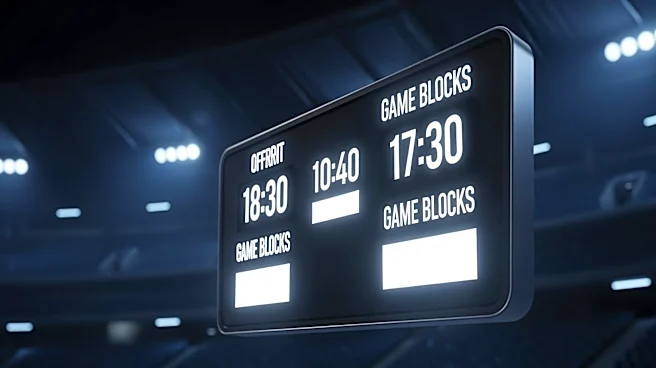
disclosed, but the specific game times were not. The new scheduling format assigns each game to a time block—early, afternoon, or night—with some games designated as 'flex,' meaning they could be scheduled for either afternoon or night. Early games are set for 11 or 11:45 a.m., afternoon games for 2:30 or 3:15 p.m., and night games for 6 or 6:45 p.m. Central Time. Specific game times and television channels will be announced later. The schedule includes non-conference games against Austin Peay, Delaware, and NC State, with times already set for these matchups.
Why It's Important?
The introduction of a nine-game conference schedule in the SEC is a significant shift, potentially impacting team strategies and fan engagement. For Vanderbilt, this change could influence their competitive standing within the conference, as more games against SEC opponents may increase the level of competition. The new scheduling format also aims to enhance viewership by strategically placing games in time slots that maximize audience reach. This could lead to increased revenue from broadcasting rights and sponsorships. Additionally, the flexibility in scheduling allows for adjustments based on team performance and viewer interest, potentially leading to more high-profile matchups in prime viewing slots.
What's Next?
As the 2026 season approaches, Vanderbilt and other SEC teams will prepare for the increased competition and strategize around the new schedule. The announcement of specific game times and TV channels will be crucial for fans planning to attend games or watch from home. Teams will likely adjust their training and travel schedules to accommodate the new game times. The SEC will monitor the impact of the nine-game schedule on team performance and fan engagement, which could influence future scheduling decisions. Stakeholders, including broadcasters and sponsors, will also assess the financial implications of the new format.