



What's Happening?
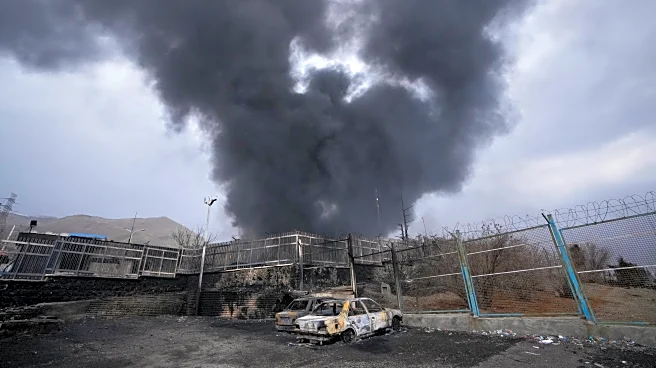
The ongoing conflict in the Middle East, particularly involving Iran, has led to significant disruptions in oil supply, causing a spike in oil prices. This situation has heightened concerns about a potential recession in the United States. Economists
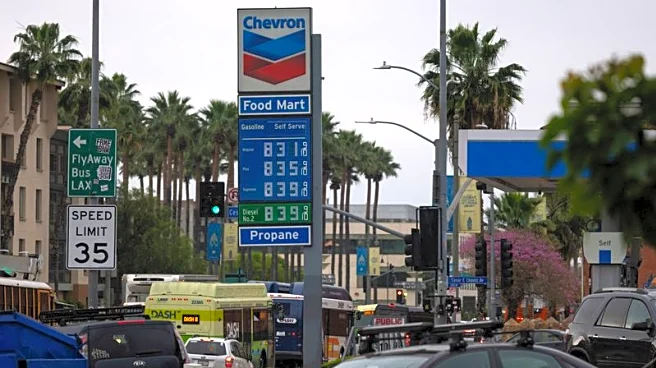
have noted that the U.S. economy, which has been resilient through various challenges, now faces a new test with the war-induced oil price surge. The price of oil briefly reached $119 per barrel, increasing the probability of a recession to 35%, according to prediction market Kalshi. The rise in oil prices has already led to a 50-cent increase in gas prices, impacting consumer spending. The U.S. economy, heavily reliant on consumer spending, could face a downturn if consumers cut back on shopping and travel due to higher fuel costs. The job market, which has shown signs of vulnerability, could further deteriorate if businesses are forced to lay off workers.
Why It's Important?
The potential recession poses significant risks to the U.S. economy, which is still recovering from previous economic shocks. The increase in oil prices could lead to higher inflation, further straining household budgets. As consumer spending is a major driver of the U.S. economy, any reduction in spending could lead to a negative economic cycle, resulting in job losses and reduced economic growth. The situation is reminiscent of past economic challenges, such as the oil shocks of the 1970s, which led to stagflation. The current economic environment is already fragile, with slow job growth and rising inflation, making the economy more susceptible to external shocks.
What's Next?
The resolution of the conflict in the Middle East could stabilize oil prices, potentially averting a recession. However, if the conflict persists, the U.S. economy may face prolonged economic challenges. Policymakers and economists will need to monitor the situation closely and consider measures to mitigate the impact on consumers and businesses. The Federal Reserve may need to balance its approach to managing inflation and supporting economic growth, especially if the oil price surge continues to affect the broader economy.