






What's Happening?
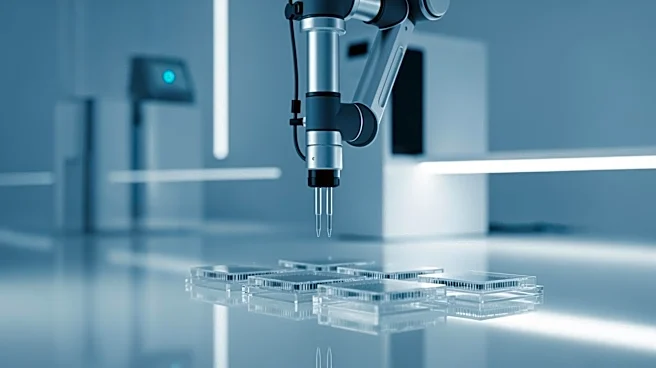
Automated liquid handling systems are essential in modern laboratories, but they pose significant risks of cross-contamination, which can compromise data integrity. Cross-contamination occurs when analytes, reagents, or biological materials are inadvertently
transferred between samples, leading to false positives or irreproducible results. The article discusses various strategies to mitigate these risks, including the use of disposable tips, which eliminate sample-to-sample carryover, and fixed reusable tips, which require validated wash protocols. Environmental controls such as HEPA-filtered enclosures and UV decontamination are also highlighted as effective measures to prevent contamination. Additionally, the importance of liquid class settings, which define how a liquid handler aspirates and dispenses fluids, is emphasized as a critical factor in reducing carryover.
Why It's Important?
Cross-contamination in automated liquid handling systems can have severe implications for laboratories, particularly those involved in clinical diagnostics, genomics, and regulated bioanalytical assays. Ensuring accurate and reliable data is crucial for these fields, as errors can lead to incorrect conclusions and affect patient outcomes or research validity. The strategies outlined in the article provide laboratories with practical solutions to enhance data integrity and reduce contamination risks. By implementing these measures, labs can improve their operational efficiency, reduce consumable costs, and maintain compliance with regulatory standards, ultimately supporting the advancement of scientific research and healthcare.
What's Next?
Laboratories are encouraged to treat carryover testing as a formal validation exercise, repeating it whenever there are changes in liquid class settings, tip types, or assay matrices. Establishing routine verification schedules and documenting liquid class parameters are recommended practices to ensure ongoing quality control. As laboratories continue to evolve and adopt new technologies, they must remain vigilant in assessing and optimizing their automated systems to prevent contamination. Future developments in liquid handling technology may offer enhanced features and capabilities, further reducing contamination risks and improving data reliability.
Beyond the Headlines
The ethical implications of cross-contamination in laboratory settings are significant, as compromised data can lead to incorrect scientific conclusions and affect public trust in research findings. Laboratories must prioritize data integrity and transparency to uphold ethical standards and maintain credibility within the scientific community. Additionally, the cultural shift towards automation in laboratories highlights the need for continuous education and training for lab personnel to effectively manage and optimize these systems. As automation becomes more prevalent, labs must balance technological advancements with human oversight to ensure accurate and reliable results.