




What's Happening?
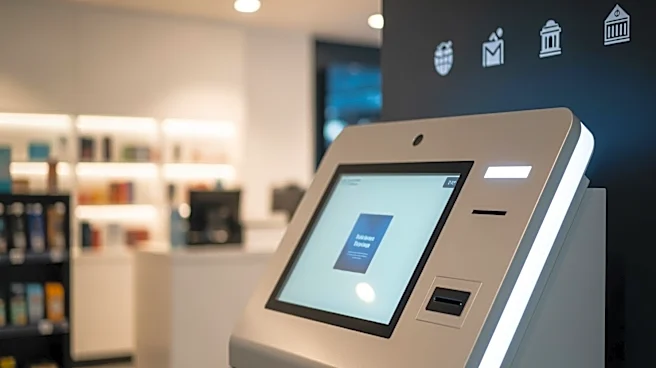
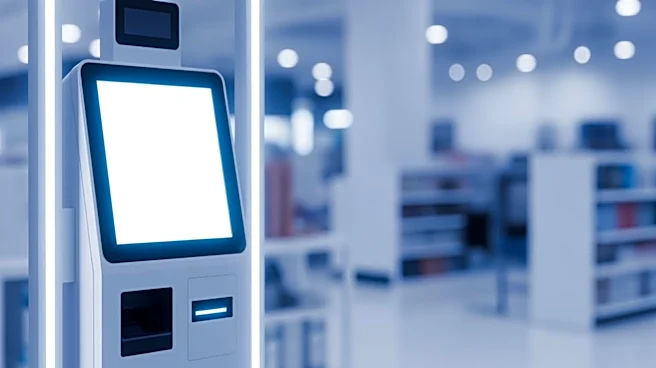
The self-checkout systems market is projected to experience significant growth, reaching a valuation of $10.82 billion by 2030, with a compound annual growth rate (CAGR) of 13.3%. This expansion is driven by factors such as the adoption of contactless
payment methods, automation of store operations, and the rise of unmanned retail formats. Advances in AI-powered checkout software and the deployment of self-service retail technologies are also contributing to this trend. Key market players include Diebold Nixdorf Inc., NCR Corporation, and Toshiba Global Commerce Solutions, among others. Recent developments, such as Standard AI's acquisition of Skip Checkout Company, highlight the ongoing innovation and consolidation within the industry.
Why It's Important?
The rapid growth of the self-checkout systems market signifies a shift in retail operations towards more efficient and customer-friendly solutions. As retailers adopt these technologies, they can reduce wait times, enhance customer satisfaction, and streamline operations. This trend is particularly relevant in the context of increasing consumer demand for contactless and autonomous shopping experiences. For businesses, investing in self-checkout systems can lead to cost savings, improved operational efficiency, and a competitive edge in the retail market. Additionally, the integration of AI and computer vision technologies in these systems offers opportunities for further innovation and differentiation.
What's Next?
As the market continues to grow, retailers are likely to explore new technologies and partnerships to enhance their self-checkout offerings. The focus will be on improving transaction speeds, reducing theft through computer vision technology, and expanding the use of mobile and scan-and-go checkout models. Companies may also invest in developing compact self-checkout units for smaller stores and integrating facial recognition for seamless transactions. These advancements will require ongoing investment in research and development, as well as collaboration with technology providers to stay ahead in the competitive retail landscape.