




What's Happening?
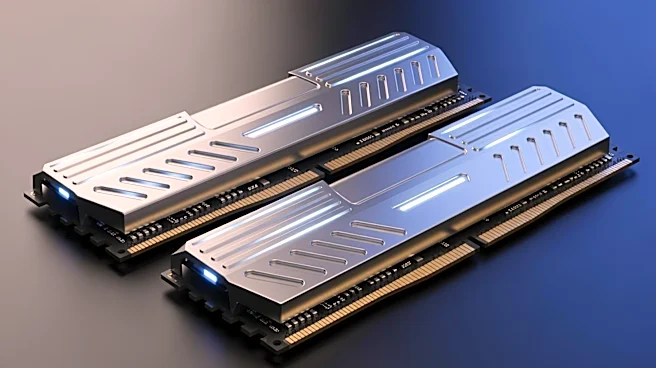
Origin Code has unveiled a new 4R CUDIMM DDR5 memory kit designed for Intel desktop platforms, specifically targeting the Intel Core Ultra 200S Plus desktops. This new memory kit features a 256GB configuration using only two modules, each with a capacity
of 128GB. The design incorporates a Clock Driver (CKD) to enhance signal integrity at higher memory speeds, allowing for greater capacity per module while maintaining a two-DIMM configuration. The standard configuration operates at DDR5-8000 with CL64 timings and a 1.1V operating voltage, while a tuned version runs at DDR5-8000 CL42 with a 1.4V voltage. This memory kit has been validated on an Intel Core Ultra 7 270K Plus processor and a GIGABYTE Z890 AORUS ELITE DUO X motherboard, which supports up to 256GB of memory. Origin Code plans to showcase this memory at COMPUTEX 2026.
Why It's Important?
The introduction of this high-capacity DDR5 memory kit by Origin Code represents a significant advancement in memory technology for desktop platforms. By achieving a 256GB capacity with just two modules, this development could set a new standard for high-performance computing, particularly in fields requiring substantial memory resources such as data analysis, gaming, and professional content creation. The collaboration with GIGABYTE and Intel highlights the industry's push towards more efficient and powerful computing solutions. This advancement could benefit users who require high-speed and high-capacity memory for demanding applications, potentially influencing future motherboard and processor designs to accommodate such high-capacity memory configurations.
What's Next?
Origin Code's demonstration of this memory kit at COMPUTEX 2026 will likely attract attention from industry professionals and consumers interested in cutting-edge computing technology. The success of this product could lead to further collaborations and innovations in memory technology, potentially prompting other companies to develop similar high-capacity solutions. Additionally, as more applications demand higher memory capacities, motherboard manufacturers may need to adapt their designs to support these advancements, potentially leading to a new wave of hardware upgrades in the consumer and professional markets.