
What's Happening?
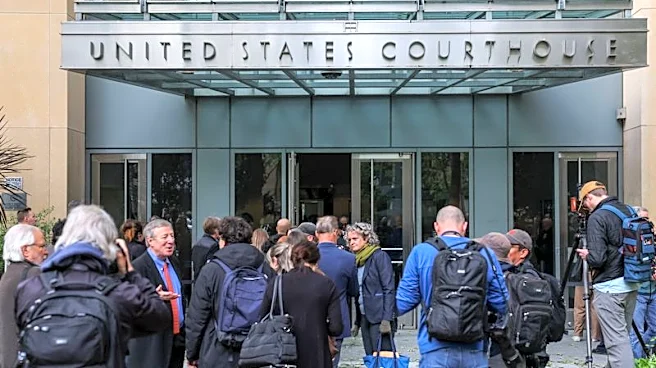
Elon Musk testified in a federal court in Oakland, California, detailing his fallout with OpenAI's leaders, including Sam Altman and Greg Brockman. Musk accused them of shifting OpenAI from its original
nonprofit mission to a for-profit model, allegedly to enrich themselves. He claimed this shift was supported by significant investments from Microsoft Corp. Musk's testimony is part of a lawsuit seeking $134 billion in damages, the removal of Altman and Brockman from leadership, and a reversal of OpenAI's for-profit status. OpenAI and Altman have countered, accusing Musk of harassment and attempting to undermine competition with his own AI startup, xAI.
Why It's Important?
The trial highlights tensions between nonprofit and for-profit models in the tech industry, particularly in AI development. Musk's allegations, if proven, could impact OpenAI's operations and its relationship with major investors like Microsoft. The case also underscores the challenges of maintaining altruistic goals in a rapidly commercializing sector. A ruling in Musk's favor could set a precedent for how tech companies balance profit motives with public good, potentially influencing future AI governance and investment strategies.
What's Next?
The trial's outcome could lead to significant changes in OpenAI's leadership and business structure. If Musk prevails, it may prompt other tech companies to reassess their governance models. The case could also influence regulatory scrutiny on tech firms' transitions from nonprofit to for-profit entities. Stakeholders, including investors and AI researchers, will likely monitor the proceedings closely, as the verdict could affect investment flows and innovation trajectories in the AI sector.