


What's Happening?
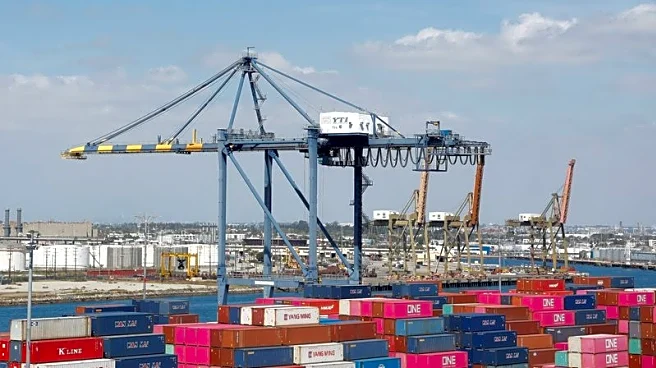
In response to the ongoing war in Iran and its impact on global energy markets, the Trump administration has announced a temporary waiver of the Jones Act. This century-old law requires goods transported between U.S. ports to be carried on U.S.-flagged
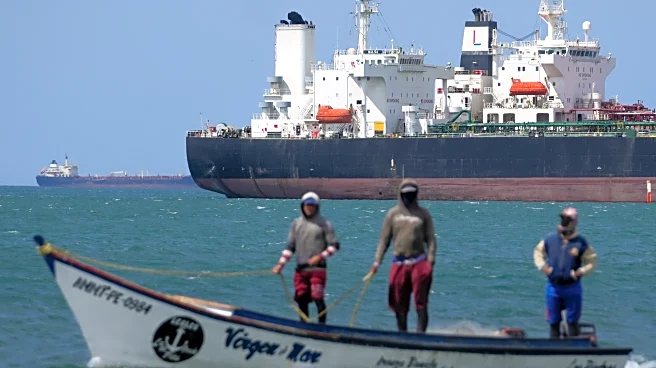
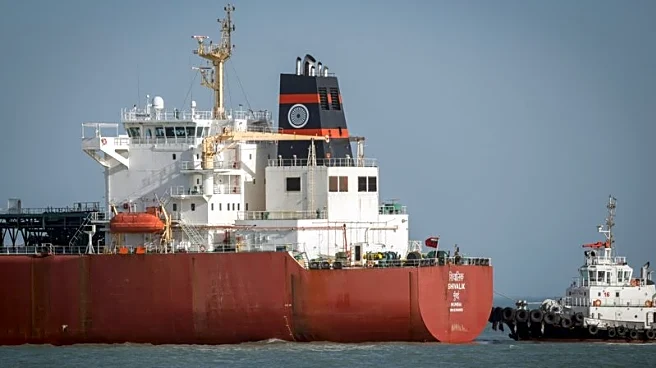
vessels. The waiver, effective for 60 days, aims to alleviate disruptions in oil supply and reduce gas prices. The decision comes as oil prices have surged due to halted tanker movements in the Strait of Hormuz and reduced production by Middle Eastern oil producers. The administration hopes the waiver will help stabilize the oil market and ease consumer costs.
Why It's Important?
The waiver of the Jones Act is a significant move by the Trump administration to address the economic fallout from the Iran conflict. By allowing foreign-flagged vessels to transport goods between U.S. ports, the administration seeks to increase shipping capacity and reduce transportation costs. This measure could provide temporary relief to consumers facing rising gas prices. However, the decision also raises concerns about the long-term impact on the U.S. shipping industry and domestic labor. The waiver highlights the challenges of balancing national security interests with economic pressures in times of international conflict.
What's Next?
The temporary waiver of the Jones Act is part of a broader strategy to mitigate the economic impact of the Iran war. The administration is also exploring other measures, such as easing sanctions on Venezuela and releasing oil from strategic reserves, to boost supply. The effectiveness of these actions in stabilizing the oil market remains to be seen. As the conflict continues, the administration may face pressure to extend the waiver or implement additional measures to address energy market disruptions. The situation underscores the need for strategic planning and international cooperation to manage the economic consequences of geopolitical conflicts.