

What's Happening?
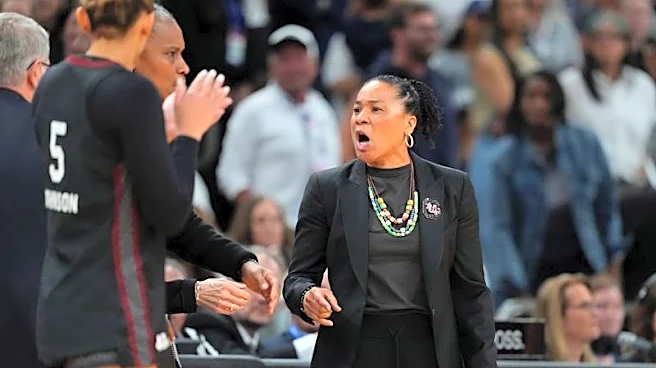
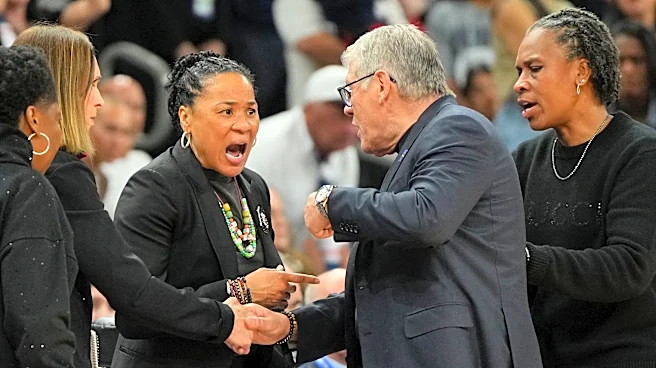
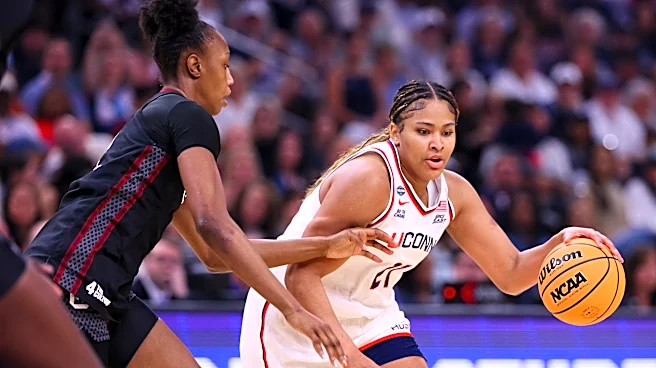
During the women's Final Four semifinal game, South Carolina's head coach Dawn Staley faced an unexpected situation with UConn's head coach Geno Auriemma. After South Carolina's victory over UConn, Auriemma approached Staley and made a comment that led
to a brief confrontation, requiring intervention from their respective staffs. Despite the tension, Staley chose not to escalate the situation during the postgame press conference, deflecting questions about the incident and focusing on her team's achievements. This incident underscores the challenges Staley faces as a prominent Black female coach in a field where double standards persist.
Why It's Important?
Staley's handling of the situation is significant as it highlights the ongoing issue of double standards in sports, particularly for Black women. Her decision to maintain composure and focus on her team's success rather than the altercation reflects the additional scrutiny and expectations placed on her as a Black female leader. This incident also sheds light on the broader societal challenges of racial and gender biases, where similar actions by individuals of different demographics may be perceived and judged differently. Staley's restraint serves as a reminder of the resilience required to navigate these dynamics while maintaining professional integrity.
What's Next?
As the tournament progresses, Staley and her team will continue to focus on their performance and aim for another national championship. The incident with Auriemma may prompt discussions within the sports community about the treatment and expectations of coaches based on race and gender. It could also lead to increased awareness and dialogue about the need for equitable standards and respect across all levels of sports. Staley's approach may inspire other coaches and athletes to prioritize their goals and achievements over distractions and controversies.
Beyond the Headlines
The incident between Staley and Auriemma also highlights the cultural and ethical dimensions of sportsmanship and leadership. Staley's choice to prioritize her team's accomplishments over personal grievances reflects a broader cultural expectation for Black women to exhibit restraint and professionalism in the face of adversity. This expectation often places an unfair burden on individuals to navigate complex social dynamics while striving for success. The situation serves as a catalyst for examining how societal norms and biases influence perceptions and treatment of leaders in sports and beyond.