
What's Happening?
Charles Leclerc, a driver for Ferrari, has downplayed criticism regarding the team's strategy during the Australian Grand Prix, the opening race of the 2026 Formula 1 season. Leclerc finished third, behind George Russell and Kimi Antonelli, after leading
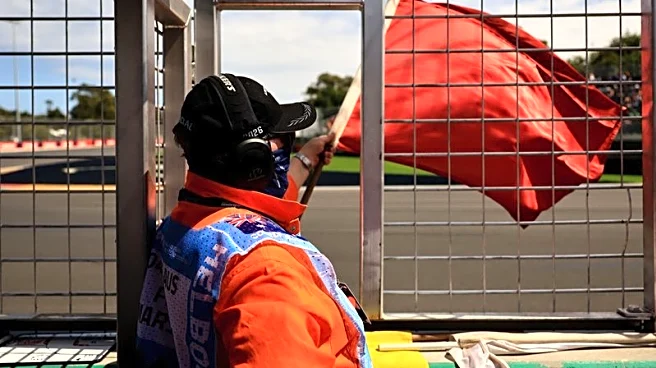
the race in its early stages. The controversy arose when Ferrari chose not to pit under a Virtual Safety Car (VSC) on lap 11, a decision that allowed Mercedes drivers to gain an advantage. A second VSC opportunity on lap 18 was also missed due to the pit lane being closed, forcing Ferrari to pit at full racing speed later, which contributed to Leclerc's drop to third place. Despite the outcome, Leclerc expressed no regrets, stating that the decision was a calculated risk based on the likelihood of multiple VSCs during the race.
Why It's Important?
The strategic decisions made by Ferrari during the Australian GP highlight the complexities and risks involved in Formula 1 racing. The choice not to pit under the VSCs had significant implications for the race outcome, affecting not only Leclerc's position but also the team's overall performance. This incident underscores the importance of strategy in motorsport, where split-second decisions can determine the difference between winning and losing. For Ferrari, this race serves as a learning opportunity to refine their strategies in future races, especially under the new regulations introduced in 2026. The outcome also impacts the competitive dynamics of the season, as teams like Mercedes capitalize on strategic opportunities to gain an edge.
What's Next?
As the 2026 Formula 1 season progresses, teams will continue to adapt to the new regulations and refine their strategies. Ferrari will likely analyze the Australian GP to improve their decision-making processes in future races. The next races will test whether Ferrari can leverage their learnings to enhance their performance and challenge competitors like Mercedes more effectively. Additionally, the ongoing adjustments to the new rules will be closely monitored by teams and drivers, potentially leading to further strategic innovations as the season unfolds.