







What's Happening?
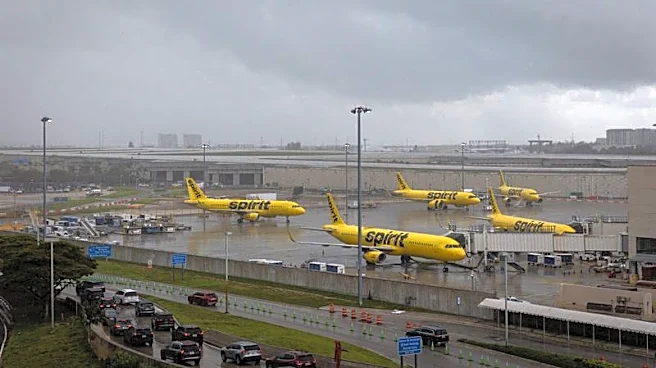
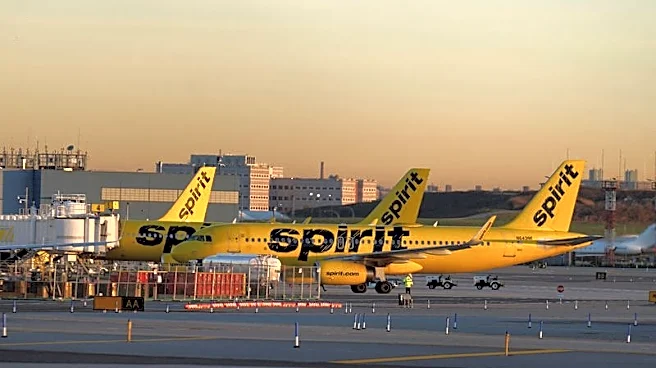
The Trump administration is reportedly considering a $500 million bailout for Spirit Airlines, which could result in the federal government acquiring up to a 90% stake in the airline. This move comes as Spirit faces bankruptcy and struggles with high
operational costs, particularly due to rising fuel prices. The potential government intervention aims to keep Spirit operational and maintain competition in the low-cost carrier market. However, the proposal has sparked debate over the implications of government ownership in the airline industry, with concerns about potential impacts on competition and safety regulations.
Why It's Important?
The proposed government stake in Spirit Airlines could have significant ramifications for the airline industry and consumers. By keeping Spirit operational, the government aims to preserve competition and prevent fare increases that could result from reduced market options. However, the intervention raises questions about the role of government in the private sector and the potential for conflicts of interest, as the government would both regulate and own a major airline. The decision could set a precedent for future government involvement in struggling industries, influencing policy debates on corporate bailouts and market competition.
What's Next?
As discussions continue, the outcome of the proposed bailout will depend on negotiations between the government, Spirit Airlines, and its creditors. The decision will likely consider the broader implications for the airline industry and the potential impact on consumers. If the bailout proceeds, it could lead to changes in how the government approaches support for struggling companies, particularly in the context of national economic interests. The situation remains fluid, with potential developments in the coming weeks as stakeholders weigh the benefits and risks of government intervention.