
What's Happening?
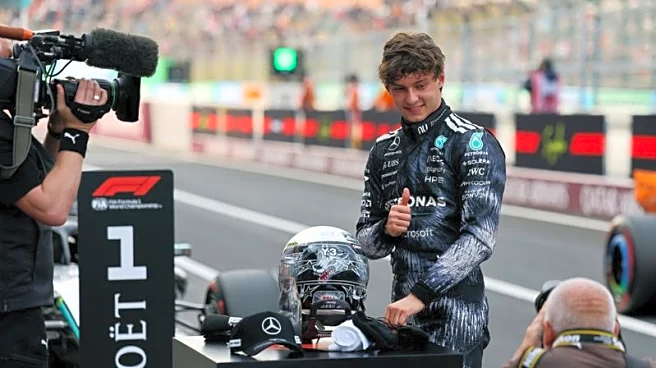
The Japanese Grand Prix at Suzuka presents a challenging scenario for Formula 1 teams as they prepare to navigate the narrow, high-downforce circuit. Kimi Antonelli, who secured pole position in Shanghai, has repeated his success in Japan, highlighting
the importance of starting at the front. Historically, seven of the last eight races at Suzuka have been won from pole position, emphasizing the difficulty of overtaking on this track. Despite advancements in overtaking tools available to teams in 2026, strategy remains crucial for gaining an advantage. Teams are considering various pit stop and tire strategies to optimize their performance on race day.
Why It's Important?
The strategic decisions made by Formula 1 teams at the Japanese Grand Prix could significantly impact the championship standings. With overtaking being a challenge at Suzuka, starting positions and pit strategies become critical. Teams that can effectively manage their tire wear and pit stops may gain a competitive edge, potentially altering the outcome of the race. This race serves as a test of both driver skill and team strategy, with implications for the overall season performance. Success at Suzuka could boost a team's confidence and momentum as the season progresses.
What's Next?
As the race approaches, teams will continue to refine their strategies, taking into account weather conditions and track dynamics. The performance in practice sessions will provide further insights into tire behavior and fuel consumption, allowing teams to adjust their plans accordingly. Fans and analysts will be watching closely to see how teams adapt their strategies in real-time during the race. The outcome of the Japanese Grand Prix could influence team strategies for the remaining races of the season, as they seek to maximize their points and standings.
Beyond the Headlines
The Japanese Grand Prix at Suzuka not only tests the technical and strategic capabilities of Formula 1 teams but also highlights the importance of adaptability in motorsport. The race underscores the evolving nature of Formula 1, where technological advancements and strategic innovation play a pivotal role. The ability to quickly adapt to changing conditions and make split-second decisions is a hallmark of successful teams. This race serves as a reminder of the intricate balance between engineering prowess and human skill in the world of Formula 1.