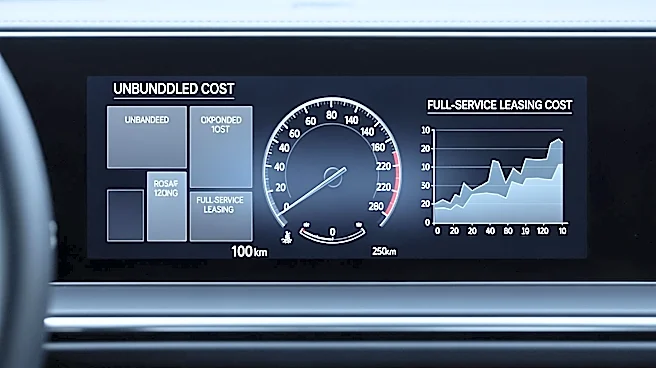

What's Happening?
The article explores the cost implications of different fleet management models, specifically unbundling versus full-service leasing. Unbundling involves separating truck acquisition, financing, and maintenance,
allowing fleets to manage these aspects internally. This model offers cost control and flexibility, particularly for larger fleets with the resources to handle variability. In contrast, full-service leasing provides cost predictability through fixed monthly payments that cover maintenance and repairs. However, this convenience often comes at a higher overall cost due to risk premiums and provider margins. The choice between these models depends on a fleet's size, capabilities, and willingness to pay for convenience.
Why It's Important?
The decision between unbundling and full-service leasing has significant financial implications for fleet operators. Unbundling can lead to substantial cost savings for larger fleets with the expertise to manage maintenance and procurement internally. This model allows for more strategic decision-making and cost management, which is crucial in an industry facing high truck prices and tight maintenance labor markets. On the other hand, full-service leasing offers smaller fleets or those with limited resources a way to simplify operations, albeit at a higher cost. Understanding these dynamics is essential for fleet managers aiming to optimize their operations and maintain profitability.
What's Next?
Fleet operators may increasingly evaluate their current management models to determine the most cost-effective approach as market conditions evolve. Larger fleets might invest in building internal capabilities to take advantage of the cost savings associated with unbundling. Meanwhile, leasing companies could innovate their service offerings to provide more competitive pricing or flexible terms to retain customers. The ongoing analysis of fleet management strategies will likely lead to a more nuanced understanding of cost structures, influencing future decisions in the trucking industry.