

What's Happening?
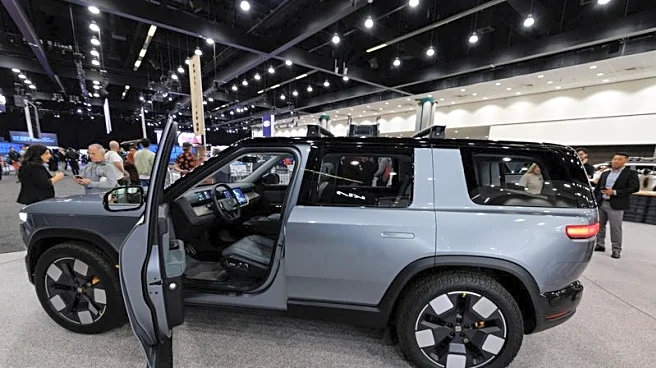
Rivian, an electric vehicle manufacturer, is advancing its autonomous vehicle technology through a self-improving AI system. This system, developed under the leadership of CEO RJ Scaringe, integrates hardware, perception, and a large foundation model that can be continuously updated via software. This approach contrasts with traditional automotive development cycles, which often involve multi-year product resets. Rivian's strategy emphasizes long-term architectural control, allowing for more agile and continuous innovation. This development is part of a broader trend where AI is reshaping the economics of innovation, enabling startups to redefine roles and make sustained investments without the operational constraints faced by larger, established
companies.
Why It's Important?
Rivian's approach to AI in autonomous vehicles represents a significant shift in how automotive technology is developed and deployed. By focusing on a flexible, continuously evolving system, Rivian is positioning itself to adapt quickly to technological advancements and market demands. This strategy could disrupt traditional automotive industry practices, which are often slower and less adaptable. For legacy automakers, this highlights the challenge of competing with more agile startups that can innovate without the burden of outdated operational models. The success of Rivian's AI system could influence other companies to adopt similar strategies, potentially accelerating the pace of innovation in the automotive sector.
What's Next?
As Rivian continues to develop its AI-driven autonomous vehicle technology, the company may seek partnerships or collaborations to further enhance its capabilities. The automotive industry could see increased competition as other manufacturers attempt to replicate Rivian's agile approach. Additionally, regulatory bodies may need to adapt to the rapid advancements in AI technology, ensuring that safety and ethical standards are maintained. Rivian's progress could also prompt traditional automakers to reevaluate their R&D strategies, potentially leading to more partnerships with tech companies to stay competitive.
Beyond the Headlines
The integration of AI in autonomous vehicles raises important ethical and legal questions, particularly regarding safety and liability. As AI systems become more autonomous, determining responsibility in the event of an accident could become complex. Furthermore, the shift towards AI-driven development may impact the workforce, as traditional roles in automotive manufacturing and design evolve. Companies will need to address these challenges while ensuring that their AI systems are transparent and accountable. The long-term implications of AI in the automotive industry could lead to significant changes in how vehicles are designed, manufactured, and regulated.