

What's Happening?
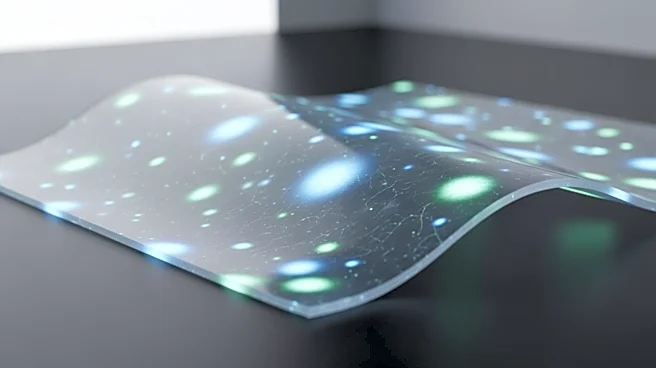
Researchers have developed a new type of plastic that can self-destruct on command, addressing the issue of long-lasting plastic waste. This 'living plastic' incorporates microbes that activate to degrade the material completely within six days, without
producing microplastics. The team, led by Zhuojun Dai, used two bacterial strains to enhance the degradation process. The innovation was tested with polycaprolactone, a polymer used in 3D printing and surgical sutures, and showed promising results. The researchers aim to expand this technology to other types of plastics, potentially revolutionizing waste management and reducing environmental impact.
Why It's Important?
The development of self-destructing plastics could significantly reduce the environmental impact of plastic waste, which is a major global concern. Traditional plastics persist for centuries, contributing to pollution and harming ecosystems. By integrating degradation into the lifecycle of plastics, this technology offers a sustainable solution to plastic waste. It could lead to a reduction in landfill use and ocean pollution, benefiting both the environment and public health. Additionally, this innovation aligns with global efforts to promote sustainability and could influence policy changes and industry standards.
What's Next?
The researchers plan to develop a trigger for the spores in water, addressing plastic pollution in aquatic environments. They also aim to apply this technology to other common plastics, potentially expanding its impact. As the technology advances, it may attract interest from industries and policymakers looking to implement sustainable practices. The success of this innovation could lead to increased funding and research in biodegradable materials, further driving the shift towards a circular economy.