


What's Happening?
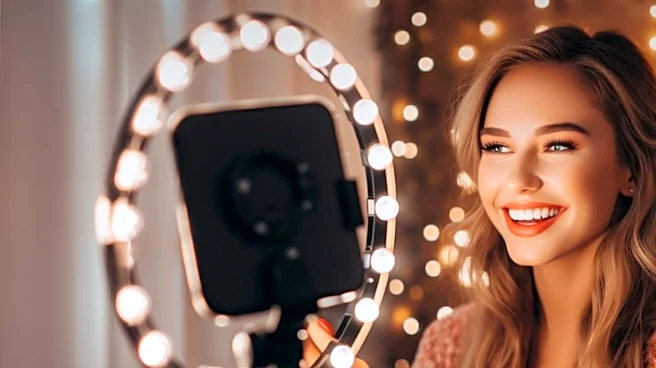
The beauty industry is witnessing a significant shift as influencers increasingly blend lifestyle content with beauty, drawing inspiration from reality TV. Influencers like Meredith Duxbury and Mikayla Nogueira are gaining popularity not just for their
beauty tips but for their engaging, often controversial content that resonates with audiences. This trend is characterized by influencers who, despite lacking formal beauty training, leverage their personalities and lifestyles to connect with followers. The approach has led to partnerships with major brands such as Prada and YSL Beauty, highlighting a shift in how beauty marketing is conducted. Influencers are now seen as cultural channels rather than mere distribution channels, as they engage audiences with relatable and sometimes provocative content.
Why It's Important?
This development is crucial as it reflects a broader transformation in the beauty industry, where traditional marketing strategies are being replaced by influencer-driven content that blurs the lines between beauty, lifestyle, and entertainment. Brands are increasingly recognizing the value of authenticity over perfection, opting to collaborate with influencers who can generate buzz and engage audiences on a personal level. This shift has implications for how beauty products are marketed and consumed, with a focus on cultural relevance and personal connection. The trend also underscores the growing influence of social media platforms like TikTok in shaping consumer behavior and brand strategies.
What's Next?
As this trend continues, brands may increasingly seek out influencers who can offer more than just beauty advice, looking for those who can create a narrative that resonates with a wider audience. This could lead to more collaborations between beauty brands and influencers who have a strong presence in lifestyle and entertainment sectors. Additionally, the success of influencers in this space may encourage more individuals to enter the beauty industry through unconventional paths, further diversifying the types of content and personalities that shape consumer preferences.
Beyond the Headlines
The blending of beauty and lifestyle content raises questions about the authenticity and ethics of influencer marketing. As influencers share more personal aspects of their lives, the line between genuine content and strategic marketing becomes blurred. This could lead to increased scrutiny from audiences and regulators regarding transparency and the authenticity of endorsements. Moreover, the reliance on controversy and drama to drive engagement may have long-term implications for the credibility of influencers and the brands they represent.