



What's Happening?
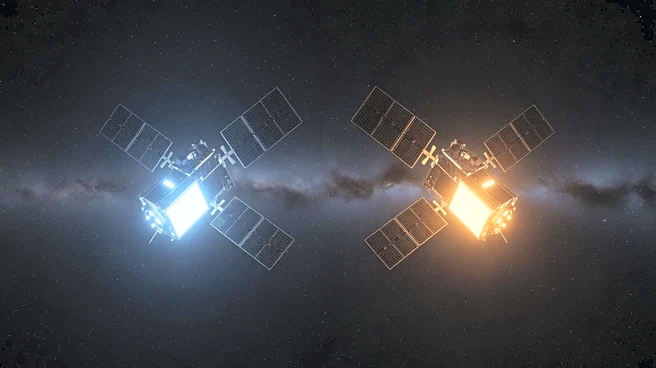
On March 1, SpaceX conducted two successful Starlink satellite launches from opposite U.S. coasts. The first launch from Vandenberg Space Force Base in California deployed 25 satellites, while the second from Cape Canaveral Space Force Station in Florida
deployed 29 satellites. Both missions utilized Falcon 9 rockets, with the first stage boosters successfully recovered on droneships. These launches increased the total number of Starlink satellites in orbit to over 9,900, marking SpaceX's 27th launch of the year.
Why It's Important?
The dual launches demonstrate SpaceX's operational efficiency and capability to conduct multiple missions in a short timeframe. This enhances the company's ability to expand its Starlink internet service, which aims to provide global broadband coverage. The growing constellation of Starlink satellites supports SpaceX's goal of generating revenue to fund future space exploration projects, including missions to Mars. The successful recovery of boosters also underscores the company's commitment to reusability, reducing launch costs and environmental impact.
What's Next?
As SpaceX continues to expand its Starlink network, the company will focus on increasing service coverage and reliability. Future launches will likely aim to fill gaps in coverage and enhance network capacity. The company may also explore partnerships and regulatory approvals to expand Starlink's reach into new markets. Additionally, SpaceX's continued success in satellite deployment and booster recovery will influence the broader space industry, encouraging further investment in reusable launch technologies.