







What's Happening?
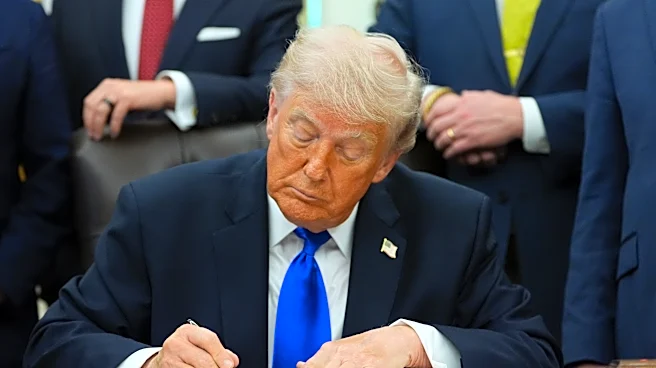
President Donald Trump has declared an increase in tariffs on European Union vehicles to 25%, citing non-compliance with a trade agreement by the EU. This announcement follows a series of trade negotiations where the U.S. had previously agreed to a 15%
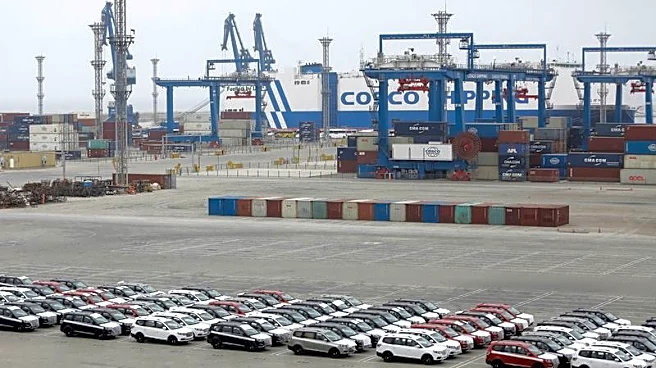
tariff on most European exports. The decision to raise tariffs is part of Trump's broader strategy to encourage foreign automakers to shift production to the United States. The move is expected to impact the automotive industry significantly, as it could lead to higher vehicle prices and potential shifts in manufacturing strategies by European carmakers.
Why It's Important?
The tariff increase is poised to affect the automotive market dynamics between the U.S. and Europe. For U.S. consumers, the cost of European vehicles may rise, potentially decreasing their market competitiveness. European manufacturers could face reduced access to the U.S. market, prompting them to reconsider their production and export strategies. This development also highlights the fragility of international trade agreements and the potential for economic disruptions when compliance issues arise. The EU's perception of the U.S. as an unreliable partner could lead to retaliatory actions, further complicating trade relations.
What's Next?
The European Union is expected to evaluate its response to the tariff increase, which may include imposing counter-tariffs on U.S. goods or seeking diplomatic resolutions. The situation could lead to renewed negotiations aimed at resolving compliance disputes and stabilizing trade relations. Automotive industry stakeholders will need to monitor developments closely and prepare for potential changes in market conditions and regulatory environments. The outcome of this dispute could set precedents for future trade negotiations and agreements.