




What's Happening?
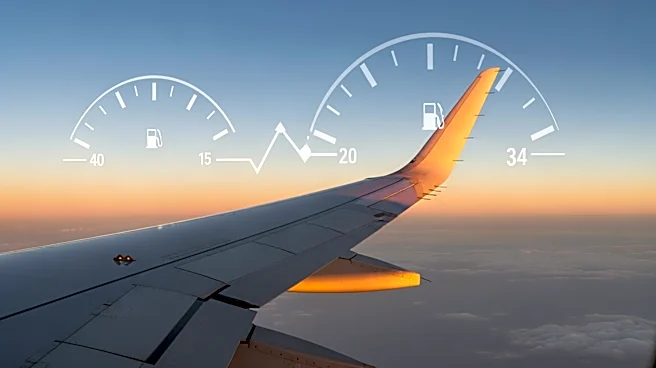
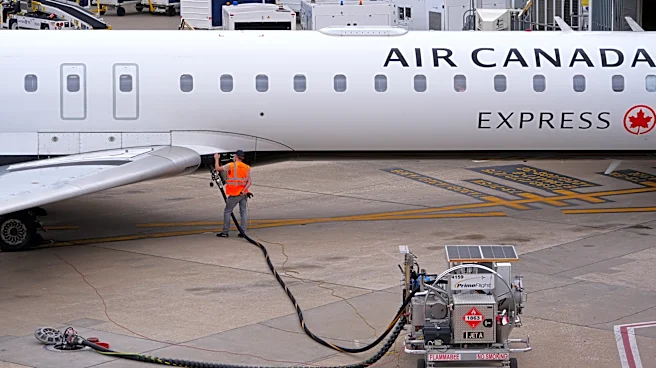
The ongoing conflict between the United States and Iran has led to significant disruptions in the airline industry, primarily due to soaring jet fuel prices. The closure of the Strait of Hormuz, a vital passage for global oil shipments, has caused a dramatic
increase in fuel costs, doubling since the conflict began. This has resulted in airlines like Air Canada suspending flights to major destinations such as New York City's John F. Kennedy International Airport. In response to these financial pressures, airlines are implementing cost-saving measures, including raising baggage fees. JetBlue and United Airlines have both announced increases in baggage fees to offset the rising operational costs. The situation is further exacerbated by predictions from the International Energy Agency, which warns of potential drastic cuts in airline operations as fuel supplies tighten.
Why It's Important?
The escalation in jet fuel prices due to the Iran conflict is having a profound impact on the airline industry, affecting both domestic and international carriers. This situation highlights the vulnerability of the airline sector to geopolitical tensions and energy market fluctuations. The increased operational costs are likely to be passed on to consumers through higher ticket prices and additional fees, potentially reducing demand for air travel. The financial strain on airlines could lead to industry consolidation, with smaller carriers like Spirit Airlines facing the risk of liquidation. This could result in reduced competition and fewer choices for consumers, impacting the overall travel experience and economic activity related to tourism and business travel.
What's Next?
Airlines are expected to continue adjusting their operations to manage the financial impact of rising fuel costs. This may include further route suspensions, increased fees, and potential layoffs. The industry will be closely monitoring the geopolitical situation and any developments in negotiations between the U.S. and Iran, which could influence fuel prices and supply stability. Additionally, airlines may explore alternative fuel sources or efficiency improvements to mitigate future risks. Stakeholders, including government agencies and industry groups, may advocate for policy measures to support the airline industry during this challenging period.