
What's Happening?
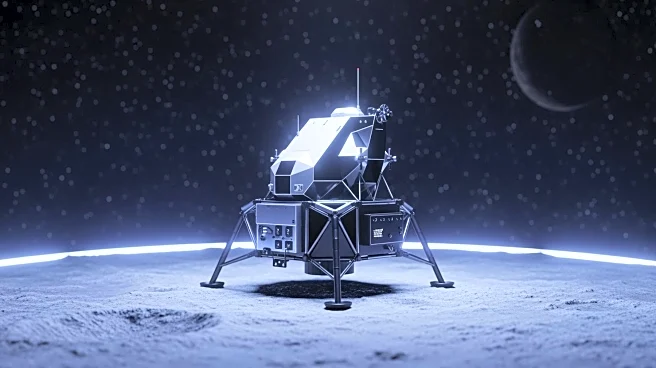
In 2025, the commercial space sector made significant strides in lunar exploration, marking a pivotal year for the industry. Firefly Aerospace successfully landed its Blue Ghost lander on the Moon in March,
a milestone that sparked increased interest from both governmental and commercial entities in developing a sustainable cislunar economy. This success was followed by Intuitive Machines' Nova-C lander, which, despite tipping on its side, managed to conduct operations from the lunar surface. Meanwhile, Japan's ispace attempted a landing with its Mission 2 lander, which unfortunately crash-landed. These efforts are part of NASA's Commercial Lunar Payload Services (CLPS) program, which aims to support low-cost lunar lander development. The program has faced challenges, including budget uncertainties and workforce issues, but remains committed to fostering commercial lunar exploration.
Why It's Important?
The advancements in commercial lunar exploration are crucial for establishing a long-term human presence on the Moon. By demonstrating the feasibility of commercial lunar landings, companies like Firefly and Intuitive Machines are paving the way for a new era of space exploration that could lead to the development of a cislunar economy. This shift from government-led to commercially-driven space exploration could reduce costs and increase innovation, benefiting industries involved in space technology and infrastructure. Additionally, NASA's support for these commercial endeavors highlights the agency's strategic pivot towards collaboration with private companies to achieve its lunar objectives, despite internal challenges.
What's Next?
Looking ahead, several lunar missions are planned for 2026, including Astrobotic's Griffin-1 mission, Blue Origin's Blue Moon Pathfinder mission, and Firefly's Blue Ghost Mission 2. These missions aim to further explore the Moon's surface and gather valuable data. Notably, Firefly's next mission will target the Moon's far side, a region previously explored only by China. Additionally, NASA's Artemis II mission, scheduled for February 2026, will be the first crewed mission to cislunar space since the Apollo program, marking a significant step towards future lunar landings. The continuation of the CLPS program and potential new initiatives will be critical in maintaining momentum in commercial lunar exploration.