









What's Happening?
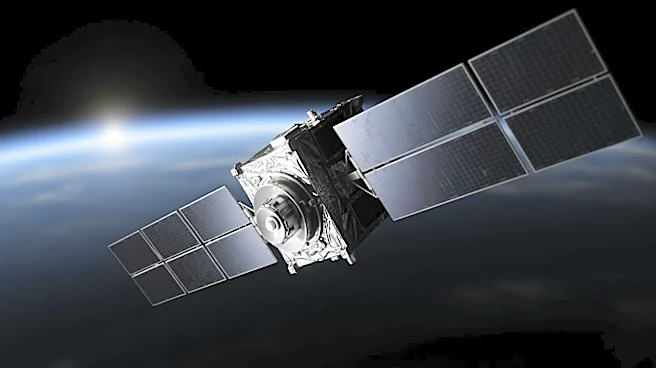
The cancellation of three geostationary satellites by SES and Eutelsat has posed challenges for the space insurance market. These satellites, initially ordered from Thales Alenia Space, were expected to be launched into geostationary orbit in the coming
years. However, SES and Eutelsat have shifted their focus towards low Earth orbit (LEO) constellations, leading to the cancellation of these expensive projects. The space insurance market, which relies heavily on premiums from geostationary satellites, is now facing a reduction in potential income as these cancellations remove valuable premium opportunities.
Why It's Important?
The space insurance market is crucial for mitigating risks associated with satellite launches and operations. The cancellation of these geostationary satellites highlights a shift in the industry towards smaller, more cost-effective LEO satellites. This transition poses a challenge for insurers who have traditionally relied on the high premiums associated with large geostationary satellites. The reduced number of insured launches could impact the financial stability of the space insurance market, which has already faced significant claims in recent years. As the industry evolves, insurers will need to adapt to new market dynamics and explore opportunities in insuring LEO constellations and other emerging space technologies.
What's Next?
The space insurance market is expected to see an increase in insured launches in 2027 and 2028, providing some optimism for recovery. Insurers may need to develop new products tailored to the needs of LEO constellations and other innovative space ventures. This could involve shifting focus from individual satellite insurance to covering entire constellations and associated revenue streams. The industry will also need to address the challenges of insuring more complex space operations, such as commercial space stations and lunar infrastructure, to ensure long-term sustainability.