

What's Happening?
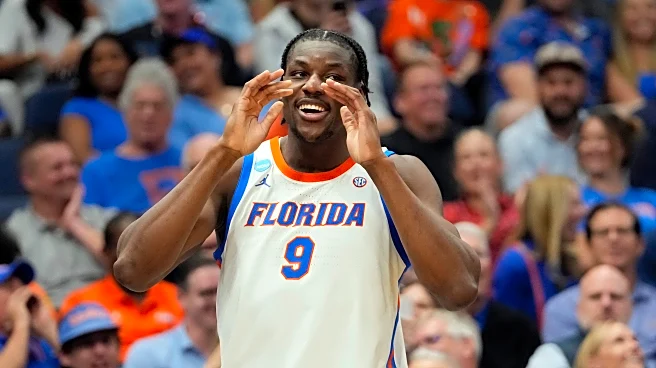
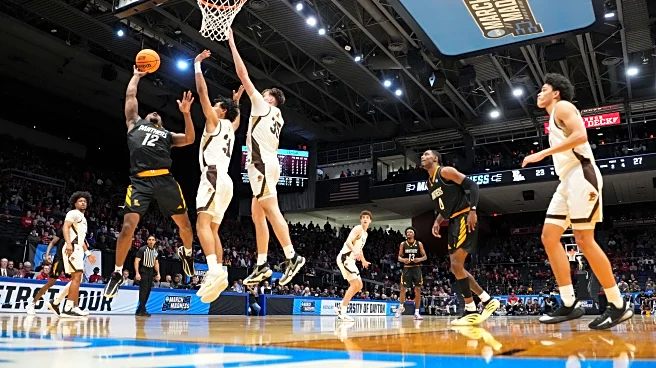
In a remarkable display of dominance, the Florida Gators defeated Prairie View A&M with a score of 114-55 during the NCAA tournament, marking the second-largest margin of victory in March Madness history. The game, which took place on a Friday, saw Florida,
a No. 1 seed, overpower the No. 16 seed Prairie View A&M. The Gators' victory was notable for its 59-point margin, a feat not seen since Loyola Chicago's 69-point win over Tennessee Tech in 1963. Initially, the game was competitive, with Prairie View A&M tying the score at 15-15 early in the first half. However, Florida quickly took control, embarking on an 18-point run and closing the first half with a 45-6 run. The second half was a continuation of Florida's dominance, with the team maintaining a lead of no less than 38 points and peaking at a 63-point advantage.
Why It's Important?
This victory underscores Florida's strong position in the NCAA tournament and highlights the team's potential to advance further in the competition. The significant margin of victory not only boosts the team's confidence but also sets a high standard for their performance in subsequent games. For Prairie View A&M, this loss is a reminder of the challenges faced by lower-seeded teams in the tournament. The game also reflects broader trends in college basketball, where top-seeded teams often dominate early rounds. This result could influence betting odds and fan expectations as the tournament progresses, impacting stakeholders such as sports analysts, betting companies, and fans.
What's Next?
As the tournament continues, Florida will prepare for their next opponent, aiming to maintain their momentum and secure further victories. The team's performance will be closely watched by analysts and fans, who will be eager to see if they can replicate such dominant performances against stronger opponents. Prairie View A&M, on the other hand, will need to regroup and analyze their performance to improve in future competitions. The outcome of this game may also prompt discussions about the seeding process and the competitive balance in the NCAA tournament.