







What's Happening?
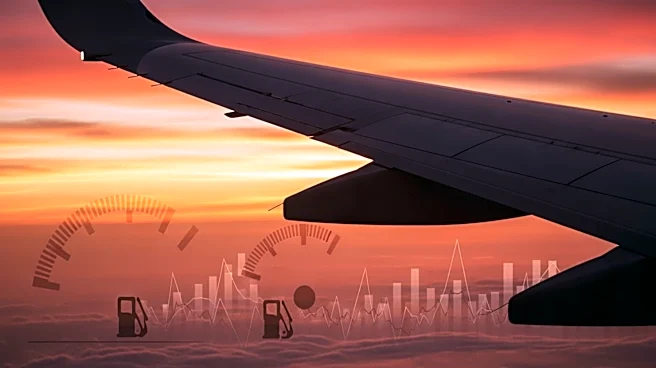
U.S. airlines are grappling with a significant increase in fuel costs, spending over $6 billion on jet fuel in April, marking a 78% rise from the previous year. This surge in costs comes despite a slight decrease in fuel consumption, as reported by the Bureau
of Transportation Statistics. The escalation in fuel prices is largely attributed to the ongoing conflict in the Middle East, which has disrupted shipping through the Strait of Hormuz, a vital oil transit route. In response to these rising costs, airlines have been forced to increase airfares, reduce perks, and adjust flight schedules. The International Air Transport Association (IATA) has revised its global profit forecast for airlines, predicting a net profit of $23 billion in 2026, a significant drop from the previous forecast of $41 billion.
Why It's Important?
The rising fuel costs present a substantial challenge for the airline industry, impacting both operational expenses and profitability. As fuel prices are expected to average $152 a barrel in 2026, airlines are likely to face increased financial pressure, with fuel accounting for over 31% of operating expenses. This situation could lead to higher airfares for consumers and potential reductions in service offerings. The broader economic implications include potential disruptions in global travel and trade, as airlines worldwide adjust their operations to manage costs. The situation underscores the vulnerability of the airline industry to geopolitical tensions and energy market fluctuations.
What's Next?
Airlines are expected to continue adjusting their strategies to cope with the rising fuel costs. This may include further increases in ticket prices, additional cuts to flight schedules, and a reevaluation of route profitability. The industry will also be closely monitoring geopolitical developments in the Middle East, as any resolution or escalation could significantly impact fuel prices and availability. Additionally, airlines may explore alternative fuel sources or efficiency improvements to mitigate the impact of high fuel costs in the long term.