
What's Happening?
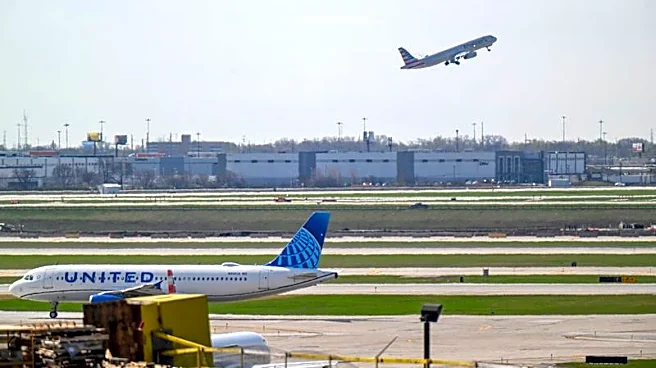
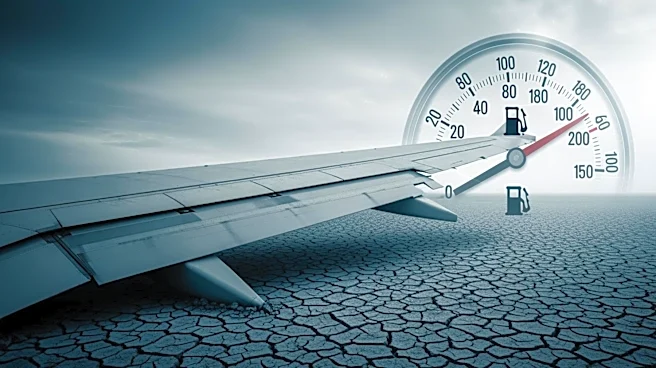
United Airlines has announced plans to increase summer fares by 15% to 20% in response to the doubling of jet fuel costs due to the ongoing conflict with Iran. The airline's CEO, Scott Kirby, stated that
despite the increased costs, demand for air travel remains strong, allowing the company to pass on some of the expenses to consumers. United Airlines is also reducing the number of flights planned for the year to manage costs, which could further drive up airfares due to reduced capacity. The airline reported higher profits last quarter, indicating resilience in the face of rising operational costs.
Why It's Important?
The decision by United Airlines to raise fares highlights the broader impact of geopolitical tensions on the airline industry, particularly in terms of fuel costs. The fare increase could affect consumer travel behavior, potentially reducing demand for air travel during the peak summer season. The airline's strategy to manage costs through capacity reduction may influence pricing dynamics and competitive positioning in the industry. The situation underscores the challenges airlines face in balancing operational costs with consumer demand in a volatile economic environment.
What's Next?
United Airlines will continue to monitor fuel prices and demand trends to adjust its pricing and capacity strategies. The airline's actions may prompt similar responses from competitors, potentially leading to industry-wide fare adjustments. Stakeholders, including consumers and industry analysts, will be watching for further developments in the U.S.-Iran conflict and its impact on energy markets. The airline industry may also explore alternative fuel sources and efficiency measures to mitigate future cost pressures.