
What's Happening?
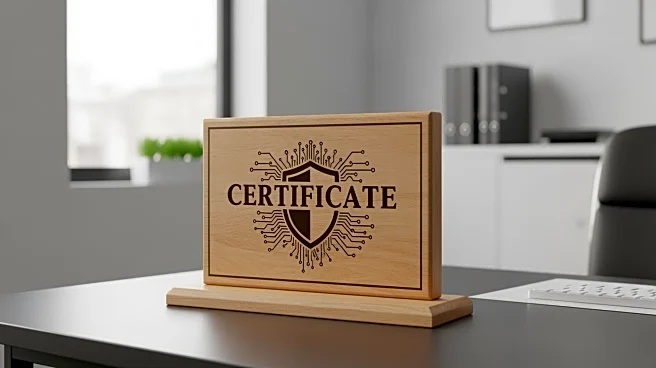
The Mise En Scene Company (MSC), a London-based film sales company, has introduced a 'No AI Used' certification for its films at the European Film Market (EFM) in Berlin. This initiative aims to publicly
verify that its films are created without the use of artificial intelligence. The certification is prominently displayed on billboards promoting MSC's key titles, such as 'Forelock' and 'Billy Knight.' MSC CEO Paul Yates emphasizes that this move is not a rejection of technology but a defense of human creativity, which he believes is becoming more vulnerable in the face of increasing machine-generated content. The initiative draws inspiration from digital rights advocate Beeban Kidron and the Human Artistry campaign, which challenge current governmental policies on copyright and AI training. MSC is calling for a unified global verification framework to distinguish human-created content from AI-generated material, similar to organic or fair-trade labels.
Why It's Important?
This initiative by MSC highlights a growing concern in the entertainment industry about the impact of artificial intelligence on human creativity. As AI technology becomes more prevalent, there is a risk that human artistry could be overshadowed by machine-generated content, potentially leading to a loss of cultural and economic value in the arts. By advocating for a global standard, MSC aims to protect the integrity of human-created works and ensure that audiences can distinguish between content made by humans and that produced by AI. This move could influence other sectors, such as publishing, music, and visual arts, to adopt similar standards, thereby preserving the role of human creativity in the digital age.
What's Next?
MSC is engaging in discussions with international partners to expand the 'No AI Used' certification beyond cinema to other creative industries. The company is urging festivals, industry stakeholders, and policymakers to support the establishment of a global verification framework. This could lead to broader industry adoption of similar certifications, potentially influencing how content is produced and consumed across various media. The initiative may also prompt further debate on the ethical and legal implications of AI in the creative sector, encouraging more stakeholders to consider the long-term impact of AI on human creativity.
Beyond the Headlines
The introduction of the 'No AI Used' certification raises important questions about the future of creativity and the role of AI in the arts. It challenges the notion that speed and cost efficiency, often associated with AI, should be the primary drivers of artistic production. By emphasizing the value of human expression, MSC's initiative could inspire a reevaluation of what constitutes art and creativity in the digital age. This debate may lead to new cultural norms and legal frameworks that better protect and promote human creativity, ensuring that it remains a vital part of the arts and entertainment industries.