





What's Happening?
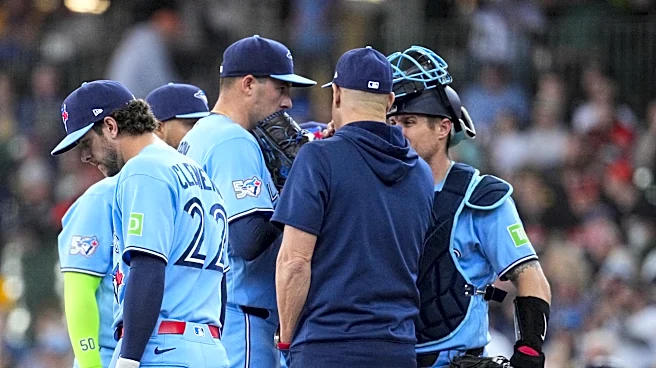
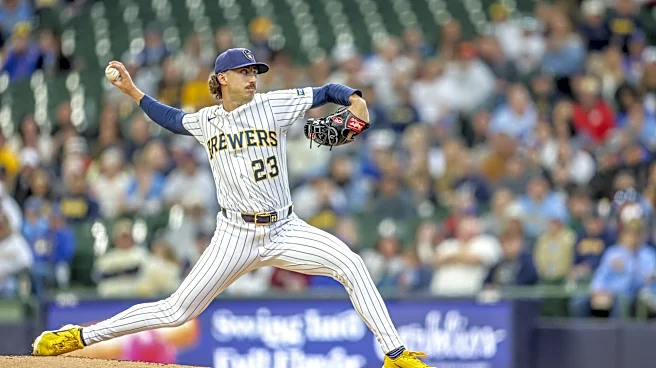
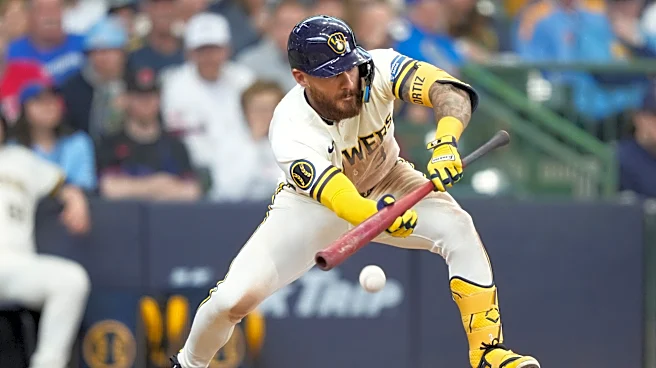
The Milwaukee Brewers secured a 2-1 victory over the Toronto Blue Jays by employing a small ball strategy, highlighted by three consecutive bunts in the seventh inning. This approach was necessitated by the absence of key players like Christian Yelich,
who is sidelined with a groin injury, and others recovering from injuries. Rookie pitcher Brandon Sproat delivered a strong performance, pitching 6 2/3 innings and allowing only one run. The Brewers' strategy capitalized on the difficulty big-bodied pitchers face in defending against bunts, a tactic that has seen a resurgence in some corners of Major League Baseball.
Why It's Important?
The Brewers' reliance on small ball tactics underscores a strategic shift in response to player injuries and the evolving dynamics of the game. This approach highlights the adaptability required in professional sports, where teams must leverage their strengths and exploit opponents' weaknesses. The Brewers' success with bunting could influence other teams to reconsider traditional strategies, potentially leading to a broader revival of small ball tactics in the league. This shift could impact how teams are constructed and how games are managed, emphasizing speed and precision over power.
What's Next?
As the Brewers continue to navigate the season without some of their key players, they may persist with their small ball strategy. The effectiveness of this approach could prompt other teams to adopt similar tactics, especially those facing similar roster challenges. The Brewers will need to maintain their adaptability and strategic creativity to remain competitive. Additionally, the return of injured players like Yelich could see a shift back to a more traditional power-hitting approach, depending on the team's performance and standings.
Beyond the Headlines
The resurgence of small ball tactics in baseball could have broader implications for the sport, potentially affecting player development and scouting. Teams may begin to value players with speed and bunting skills more highly, altering the types of athletes that are recruited and developed. This shift could also influence the way games are broadcast and marketed, as fans and analysts adjust to a style of play that emphasizes strategy and finesse over raw power.