


What's Happening?
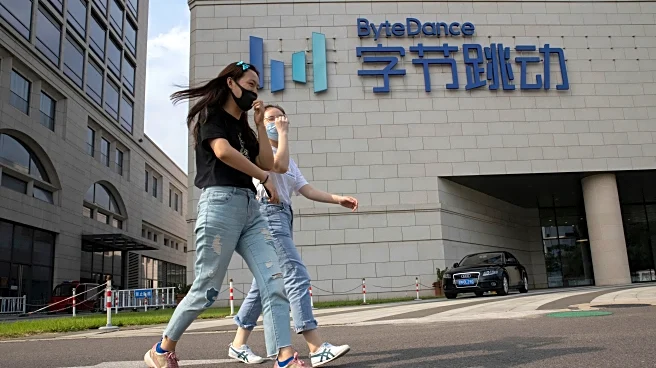
ByteDance, the Chinese tech company known for owning TikTok, has pledged to address copyright concerns related to its AI video tool, Seedance 2.0. The tool, which generates high-quality AI videos using text prompts, has been accused by Hollywood groups of violating copyright laws by using the likenesses of actors without permission. The Motion Picture Association (MPA) criticized Seedance 2.0 for unauthorized use of U.S. copyrighted works, urging ByteDance to cease its infringing activities. In response, ByteDance stated it respects intellectual property rights and is taking steps to prevent unauthorized use. The controversy intensified after a viral AI-generated video depicted actors Tom Cruise and Brad Pitt in a fictional scenario, raising
alarms about the potential impact on the film industry.
Why It's Important?
The development highlights the growing tension between traditional media industries and emerging AI technologies. Hollywood's concerns reflect broader fears about AI's potential to disrupt the entertainment sector, particularly regarding job security and intellectual property rights. The ability of AI tools like Seedance 2.0 to create realistic videos poses a challenge to existing copyright frameworks, potentially undermining the livelihoods of actors and creators. The situation underscores the need for updated legal and ethical standards to address the rapid advancements in AI technology and its implications for creative industries.
What's Next?
As ByteDance works to implement stronger safeguards, the entertainment industry will likely continue to monitor the situation closely. Legal challenges may arise as stakeholders seek to establish clearer guidelines for AI-generated content. The outcome could influence future regulations and industry practices, potentially setting precedents for how AI tools are developed and used. Additionally, the response from other tech companies and content creators will be crucial in shaping the landscape of AI in media.