






What's Happening?
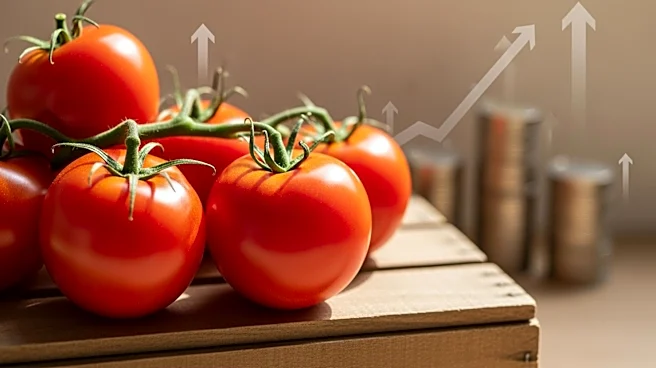
Tomato prices have surged by 40% over the past year, becoming a symbol of the broader inflationary pressures affecting the U.S. economy. This increase is part of a larger trend where overall prices rose by 3.8% in April, marking the highest inflation rate
in nearly three years. The price hike is attributed to several factors, including the Iran war, which has increased shipping costs, and the U.S. withdrawal from a trade deal with Mexico, leading to a 17% tariff on imported tomatoes. This has significantly impacted businesses like Snarf’s Sandwiches, which rely heavily on tomatoes, as their costs have increased dramatically.
Why It's Important?
The rising cost of tomatoes highlights the complex interplay between trade policies, geopolitical events, and domestic economic conditions. The tariffs and increased shipping costs have not only affected consumer prices but also strained businesses that depend on tomatoes as a key ingredient. This situation underscores the broader challenges faced by the agricultural sector and the potential for increased domestic production to mitigate such impacts. However, the immediate effect is a financial strain on both consumers and businesses, with potential long-term implications for food affordability and availability.
What's Next?
Experts suggest that tomato prices may decrease later in the year when domestically grown tomatoes are harvested. This could provide some relief to consumers and businesses. However, the current situation may prompt a reevaluation of trade policies and encourage increased domestic production to reduce reliance on imports. Businesses may also need to adjust their pricing strategies or seek alternative ingredients to manage costs. The ongoing geopolitical tensions and economic policies will continue to play a crucial role in shaping the future of food prices in the U.S.