








What's Happening?
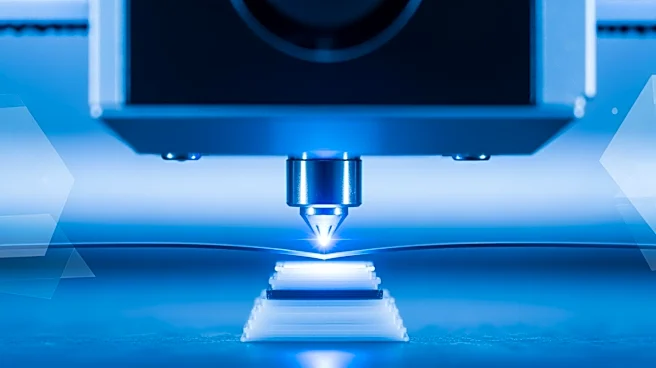
Researchers at Germany's OTH Regensburg are developing a laser-enhanced FDM (Fused Deposition Modeling) printhead to address the Z-strength issue in 3D printing. This problem arises when layers cool too quickly, leading to weak bonds and delamination.
The new printhead preheats the surface with a laser just before new filament is deposited, improving layer bonding. Although laser-assisted FDM has shown promise in laboratory settings, challenges such as cost, safety, and reliability have hindered its commercial application. The research aims to overcome these barriers and enhance the structural integrity of 3D printed objects.
Why It's Important?
Improving the Z-strength of FDM 3D prints could significantly enhance the durability and quality of printed objects, expanding the technology's applicability in various industries. Stronger layer bonding would allow for more complex and reliable designs, potentially reducing material waste and production costs. If successful, this innovation could make FDM a more viable option for industrial applications, where structural integrity is crucial. The advancement could also drive further research and development in 3D printing technologies, fostering innovation and competitiveness in the sector.