
What's Happening?
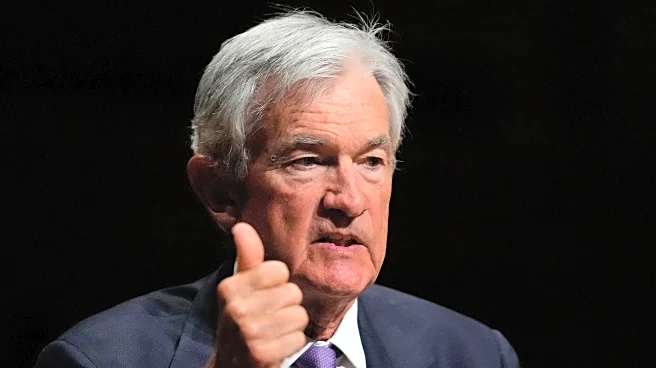
Federal Reserve Chairman Jerome Powell recently addressed concerns about the U.S. economy potentially facing stagflation during a news conference following the Fed's decision to maintain interest rates. Powell acknowledged the 'tension' between the Fed's dual
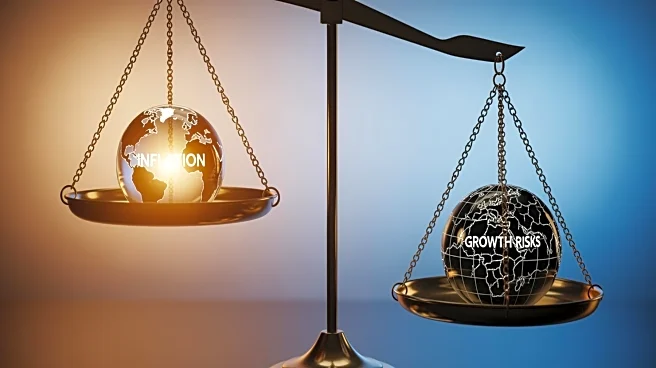
mandate of maximum employment and stable prices, but refrained from labeling the current economic situation as stagflation, a term historically associated with the 1970s when economic growth slowed, wages stagnated, and prices rose sharply. Despite the labor market's slowdown and rising price levels, Powell emphasized that the current scenario is not akin to the 1970s stagflation. The Fed's recent economic projections indicate downside risks to growth and upside risks to inflation and unemployment, suggesting a cautious approach to future policy decisions.
Why It's Important?
The Federal Reserve's stance on inflation and economic growth is crucial for shaping monetary policy and influencing financial markets. Powell's reluctance to label the current economic conditions as stagflation reflects the Fed's cautious approach to managing inflation without stifling economic recovery. The Fed's experience with inflation in 2021-22, when it allowed inflation to rise significantly, serves as a backdrop for current policy considerations. The potential for stagflation poses risks to economic stability, affecting consumer confidence, investment decisions, and overall economic growth. Stakeholders, including businesses and consumers, must navigate this uncertain environment, balancing the need for economic growth with the risks of rising prices.
What's Next?
The Federal Reserve will continue to monitor economic indicators closely, adjusting its policy stance as necessary to address inflationary pressures while supporting economic growth. Future decisions may involve interest rate adjustments if inflation persists. Economic stakeholders, including businesses and consumers, are advised to prepare for potential price increases and economic volatility. Strategies such as bolstering emergency funds, reducing high-interest debt, and increasing retirement contributions can help mitigate financial risks. The Fed's ongoing communication and policy adjustments will be critical in managing expectations and maintaining economic stability.