







What's Happening?
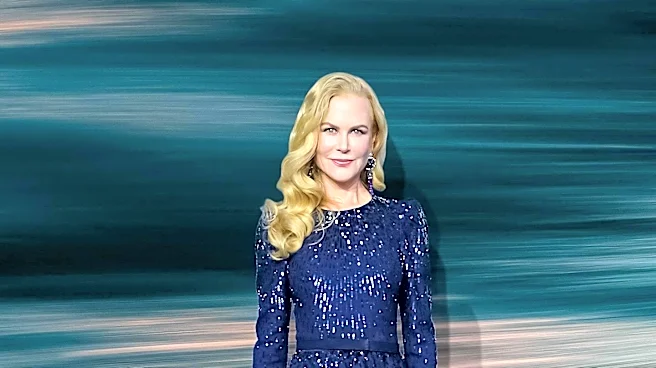
Nicole Kidman, the Oscar-winning actress, has announced her intention to train as a death doula, a role that provides nonmedical support to individuals and families facing end-of-life situations. Kidman shared this personal development during her appearance
at the University of San Francisco's 'Silk Speaker Series.' Her decision was influenced by her mother's passing in 2024, where she felt the need for impartial support during such a difficult time. Despite this new venture, Kidman remains active in Hollywood, promoting upcoming projects such as 'Practical Magic 2' and the anticipated third season of 'Big Little Lies.'
Why It's Important?
Kidman's move into the role of a death doula highlights a growing awareness and acceptance of end-of-life care options beyond traditional medical interventions. This shift could influence public perception and increase demand for such services, providing emotional and practical support during challenging times. Her involvement may also bring more visibility to the profession, encouraging others to consider it as a viable career path. Additionally, Kidman's continued success in Hollywood ensures that her influence remains strong, potentially impacting both the entertainment industry and societal attitudes towards death and dying.
What's Next?
As Kidman embarks on her training to become a death doula, she will likely balance this new role with her ongoing commitments in the entertainment industry. Her upcoming projects, including 'Practical Magic 2' and 'Big Little Lies,' will keep her in the public eye, potentially allowing her to advocate for end-of-life care on a larger platform. The reception of her new role by fans and the media could shape future discussions around death doulas and their importance in society.
Beyond the Headlines
Kidman's decision to become a death doula may spark conversations about the emotional and ethical aspects of end-of-life care. It raises questions about how society supports individuals and families during these times and the role of nonmedical professionals in providing comfort and guidance. This development could lead to broader discussions on the cultural attitudes towards death and the importance of compassionate care.