
What's Happening?
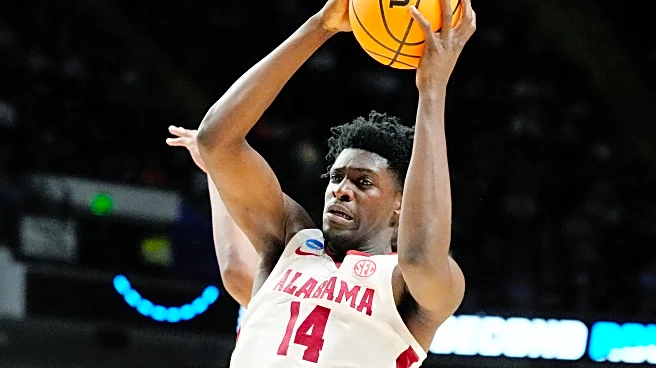
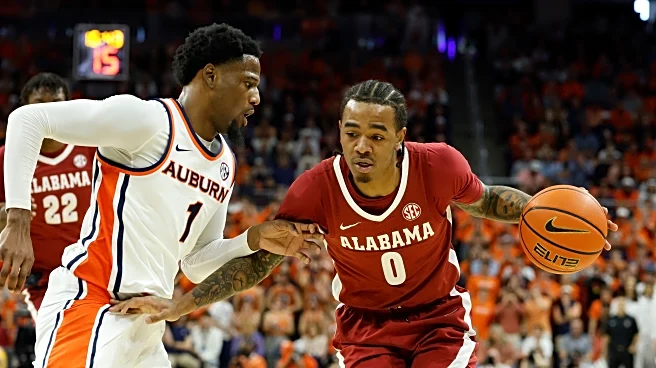
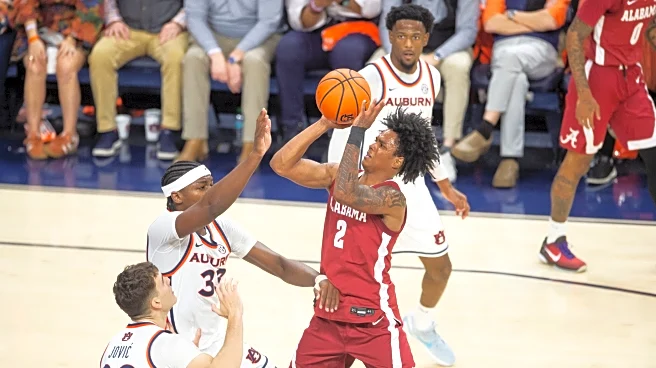
A circuit court judge in Alabama has denied Charles Bediako's motion for a preliminary injunction, which would have allowed him to continue his college basketball career with the Alabama Crimson Tide. Bediako, who previously played for Alabama before entering the 2023 NBA Draft and going undrafted, had been granted a temporary restraining order that permitted him to rejoin the team. However, Judge Daniel F. Pruet ruled that Bediako did not have a reasonable expectation to return to college basketball, citing the lack of precedent for such a case. The NCAA's eligibility rules, which have been frequently challenged in court, were upheld in this decision. Bediako's case highlights ongoing debates over NCAA eligibility, particularly for players
who have pursued professional opportunities.
Why It's Important?
This ruling is significant as it reinforces the NCAA's eligibility rules, which have been under scrutiny and legal challenges. The decision impacts not only Bediako but also sets a precedent for other athletes considering a return to college sports after pursuing professional careers. The NCAA's stance, supported by the court, emphasizes the organization's commitment to maintaining the integrity of college sports and ensuring opportunities for current and future student-athletes. This case also underscores the broader conversation about the balance between professional aspirations and collegiate athletics, as well as the legal complexities involved in eligibility disputes.
What's Next?
Following the court's decision, Bediako's future in college basketball is uncertain, as he is now ineligible to play for Alabama. The ruling may prompt further discussions and potential legislative actions regarding NCAA eligibility rules. Stakeholders, including NCAA officials, college coaches, and athletes, may seek clarity and consistency in eligibility criteria to prevent similar disputes. The case could also influence how other athletes navigate their careers between college and professional sports, potentially leading to calls for reform in NCAA policies.