



What's Happening?
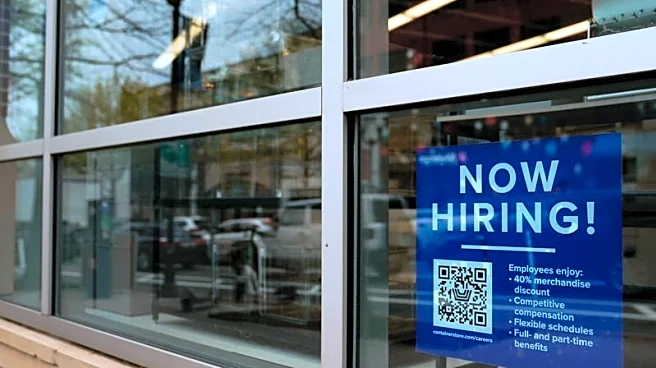
The U.S. labor market is experiencing a significant downturn as job openings have fallen to their lowest level in more than five years. According to the Labor Department's Bureau of Labor Statistics, the number of job openings decreased by 386,000 to 6.542 million by the end of December 2025. This marks the lowest level since September 2020. The data for November was also revised downward, showing 6.928 million job openings instead of the previously reported 7.146 million. This decline in job openings is a measure of reduced labor demand, reflecting a softening in labor market conditions as the year 2025 came to a close.
Why It's Important?
The drop in job openings is a critical indicator of the U.S. labor market's health and has significant implications for the economy.
A decrease in job openings suggests that employers are becoming more cautious about hiring, possibly due to economic uncertainties or a slowdown in business activities. This trend could lead to increased unemployment rates if it continues, affecting consumer spending and overall economic growth. The labor market's softening could also influence monetary policy decisions by the Federal Reserve, as they may need to consider measures to stimulate job growth and economic activity.
What's Next?
If the trend of declining job openings continues, it could prompt policymakers to take action to support the labor market. This might include fiscal measures to boost employment or monetary policies aimed at encouraging business investment and hiring. Additionally, businesses may need to adjust their strategies to navigate the changing economic landscape, potentially focusing on efficiency and cost management. The labor market's trajectory will be closely monitored by economists and policymakers to assess the need for intervention.