


What's Happening?
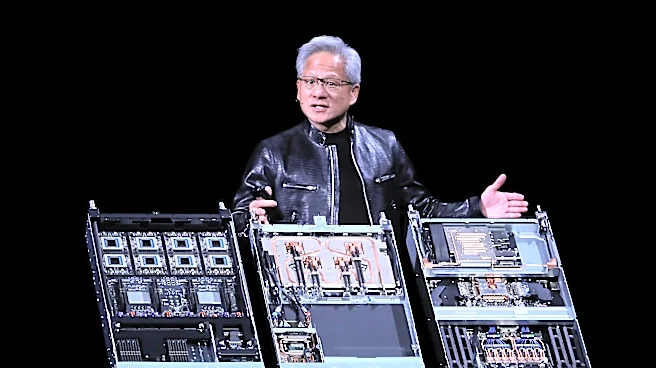
Nvidia has announced its entry into the personal computer market with the unveiling of the N1X processor, which will be part of the RTX Spark superchip. This new chip, developed in collaboration with Microsoft, is set to debut in the fall in a new line
of Windows PCs from manufacturers such as Dell, HP, Asus, Lenovo, and MSI. Nvidia CEO Jensen Huang highlighted the significance of this development, comparing it to the reinvention of the smartphone. The RTX Spark superchip combines Nvidia's Blackwell graphics processing unit with a custom Arm-based central processing unit designed by MediaTek, offering 128 gigabytes of unified memory. The chip is targeted at creators, AI developers, and gamers, promising high performance in thin and light laptops and compact desktops.
Why It's Important?
Nvidia's expansion into the PC market with the RTX Spark superchip marks a strategic move to diversify its product offerings and compete with established players like Intel and AMD. By leveraging its expertise in AI chips, Nvidia aims to capture a share of the growing market for high-performance computing devices. The introduction of Arm-based processors in PCs could challenge the dominance of x86 processors, potentially leading to shifts in industry standards and practices. This development is significant for consumers and businesses alike, as it promises enhanced computing capabilities and new opportunities for innovation in software and applications. The collaboration with Microsoft further underscores the importance of this initiative in shaping the future of personal computing.
What's Next?
As Nvidia prepares to launch the RTX Spark superchip, the tech industry will be watching closely to assess its impact on the PC market. The success of this new chip could influence future developments in computing technology, prompting competitors to innovate and adapt. Nvidia's strategic partnerships with major PC manufacturers suggest a strong commitment to ensuring the chip's market penetration and success. The upcoming release may also lead to new software developments and applications that leverage the chip's capabilities, enhancing user experiences and productivity. The broader implications for the industry include potential shifts in market dynamics and increased competition in the AI and computing sectors.