




What's Happening?
Artificial intelligence (AI) is transforming the agricultural sector by shifting from traditional labor-intensive methods to data-driven systems. According to a review published in Applied System Innovation, AI is being integrated into agriculture through
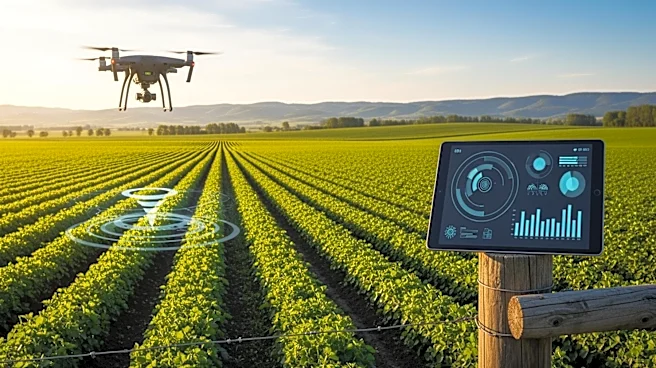
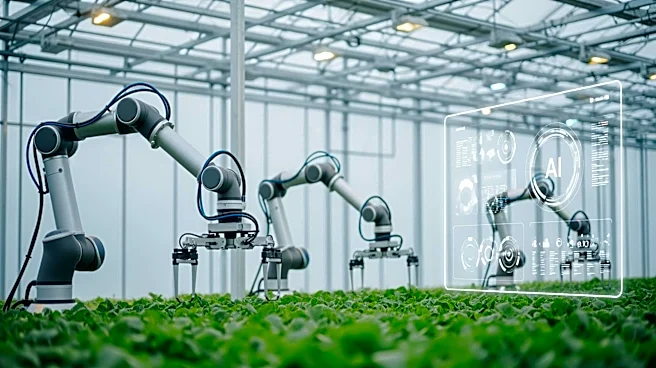
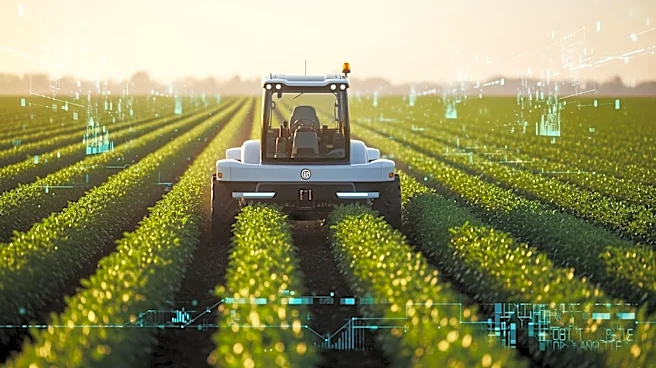
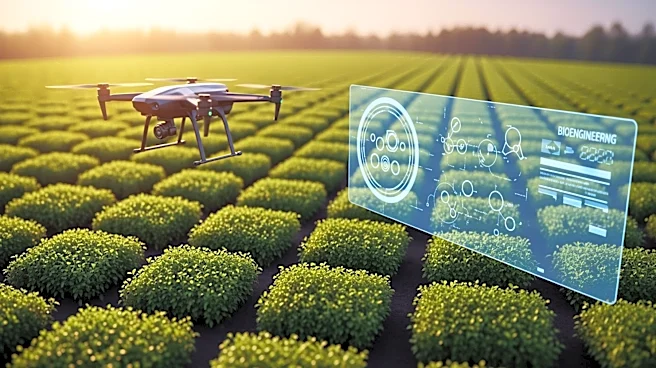
a framework of perception, decision-making, and execution. This involves using sensors, drones, and robots to collect data, make informed decisions, and perform precise farming operations. AI technologies such as UAVs, satellite imagery, and sensor networks are enhancing crop monitoring by detecting stress, forecasting yields, and guiding irrigation. The review highlights significant advancements in AI-powered perception systems, which allow for the collection and interpretation of large volumes of data on crop health and soil status. These systems are crucial in addressing global food system pressures from population growth and climate change.
Why It's Important?
The integration of AI in agriculture is crucial for improving efficiency and sustainability in food production. By enabling precise monitoring and management of crops, AI helps reduce resource use and environmental impact. This technological shift is particularly important as it addresses challenges such as resource scarcity and the environmental costs of conventional agriculture. AI-driven systems can optimize water and nutrient management, leading to reduced inputs and improved yields. The adoption of AI in agriculture also supports the transition to more sustainable farming practices, which is essential for meeting the demands of a growing global population. However, the review notes challenges such as data quality and integration issues, which need to be addressed to fully realize the potential of AI in agriculture.
What's Next?
The future of AI in agriculture involves overcoming barriers related to data quality, model explainability, and the cost of advanced technologies. As AI systems become more integrated into farming practices, there will be a need for improved data collection and analysis methods to ensure accurate and reliable decision-making. Additionally, efforts to make AI technologies more accessible and affordable for small and medium-sized farms will be crucial. The review also highlights the importance of addressing global inequality in agricultural AI, ensuring that these technologies are adapted to diverse farming contexts, particularly in developing regions. Continued research and development in AI-driven agricultural systems will be essential for advancing sustainable and efficient food production.
Beyond the Headlines
The adoption of AI in agriculture raises ethical and cultural considerations, particularly regarding data sovereignty and digital colonialism. As AI systems become more prevalent, there is a risk that farmers, especially in developing regions, may become passive data suppliers for external technology companies without fair control or benefit sharing. The review emphasizes the need for locally adapted datasets, low-cost tools, and community data cooperatives to ensure inclusive smart agriculture. Addressing these issues is vital for fostering equitable access to AI technologies and ensuring that the benefits of AI-driven agriculture are shared broadly across different regions and farming communities.