






What's Happening?
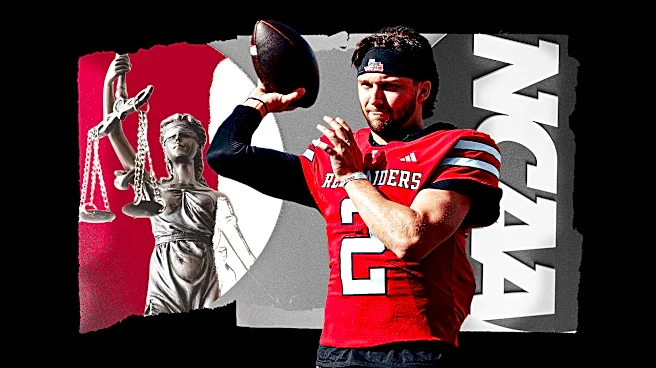
The NCAA is facing significant challenges following a Texas judge's decision to allow Texas Tech quarterback Brendan Sorsby to play in 2026 despite violations of the NCAA's gambling rules. This ruling has been described by NCAA President Charlie Baker
as a potential 'thunderbolt moment' that could galvanize political support for the NCAA. Baker, who has been vocal about the need for reform, sees this case as an opportunity to push for an antitrust exemption from Congress. The NCAA is grappling with the implications of individual players successfully challenging its authority in court, which could have widespread consequences for the organization.
Why It's Important?
The outcome of the Brendan Sorsby case could have far-reaching implications for the NCAA and college sports. If the NCAA secures an antitrust exemption, it could significantly alter the balance of power between the organization and student-athletes. This exemption would potentially limit the rights and revenues of players, impacting their ability to challenge NCAA decisions. The case highlights the ongoing tension between maintaining order in college sports and respecting the rights of individual athletes. The NCAA's push for legislative support underscores the broader debate over the governance of college athletics and the role of Congress in shaping its future.
What's Next?
The NCAA is likely to intensify its lobbying efforts to secure the desired antitrust exemption from Congress. This could involve engaging with key lawmakers, such as Senators Cantwell and Cruz, to build a coalition in support of the exemption. The organization may also seek to rally support from athletic directors, coaches, and conferences to present a united front. Meanwhile, the case could prompt further legal challenges from student-athletes, potentially leading to more court battles over NCAA regulations. The outcome of these efforts will shape the future landscape of college sports governance.
Beyond the Headlines
The Sorsby case raises ethical questions about the NCAA's approach to governance and its relationship with student-athletes. The organization's pursuit of an antitrust exemption could be seen as an attempt to consolidate power and limit the autonomy of players. This development may also spark a broader conversation about the commercialization of college sports and the influence of gambling on the industry. As the NCAA navigates these challenges, it must balance its regulatory responsibilities with the evolving expectations of athletes and the public.