





What's Happening?
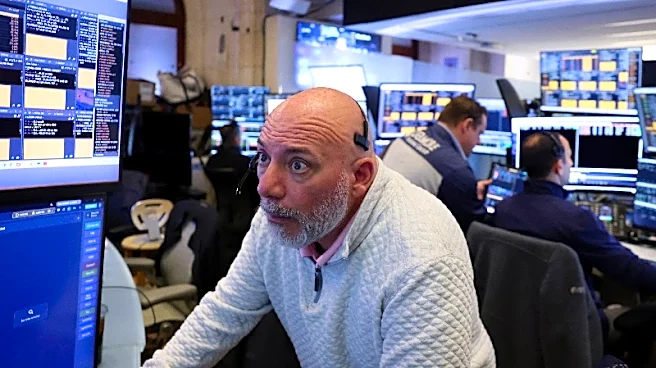
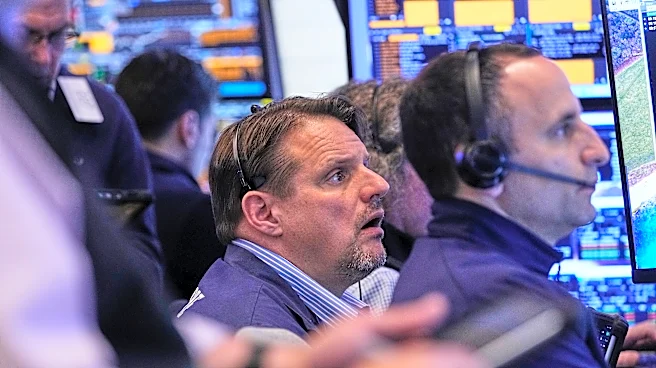
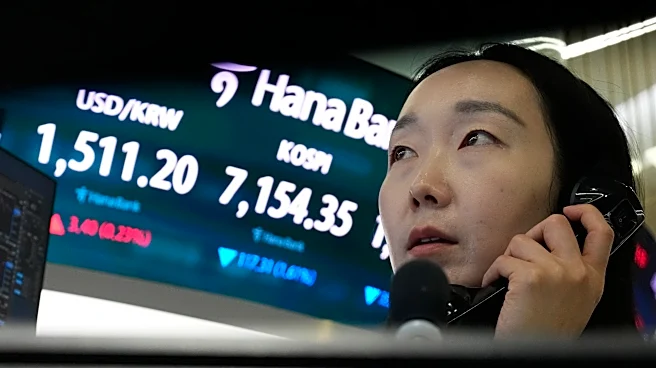
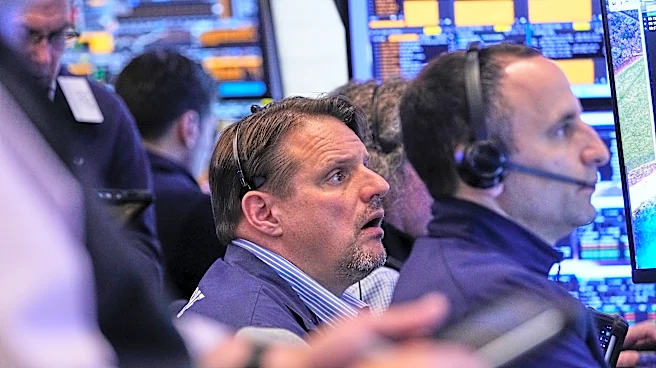
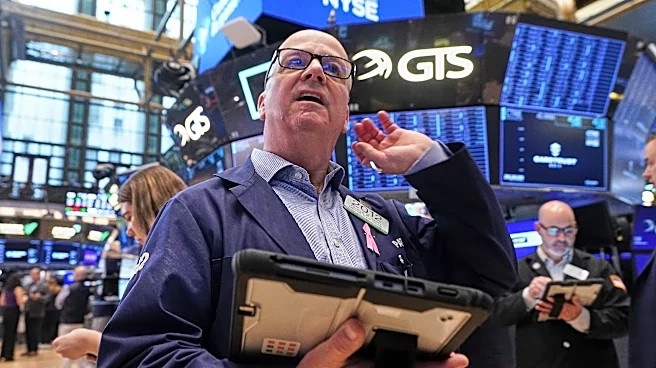
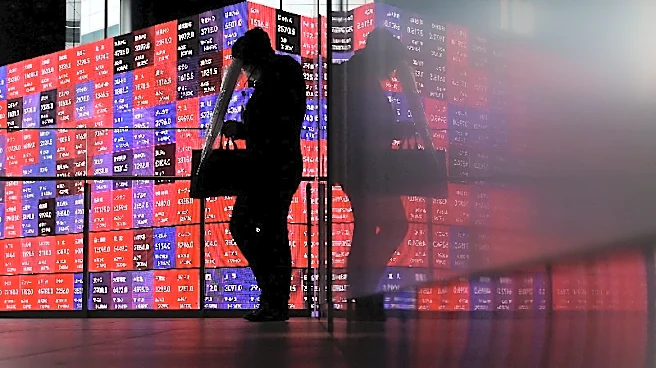
On May 19, 2026, Wall Street's major indexes, including the Nasdaq Composite, experienced a decline, marking the third consecutive day of losses. This downturn was primarily driven by a rise in the benchmark 10-year Treasury yield, which reached its highest
level in over a year due to mounting inflation concerns. The increase in yields was influenced by elevated oil prices and ongoing geopolitical tensions, particularly the lack of a peace agreement between the U.S. and Iran. Investors are also speculating about potential interest rate hikes by the Federal Reserve if inflation remains high. The S&P 500 and Nasdaq saw declines as investors took profits following a rally that began in late March.
Why It's Important?
The decline in major stock indexes, particularly the Nasdaq, highlights investor anxiety over inflation and potential interest rate hikes. Rising Treasury yields can lead to higher borrowing costs, impacting consumer spending and corporate profits. The tech sector, which is sensitive to interest rate changes, faced significant pressure. Additionally, geopolitical tensions, such as the situation with Iran, contribute to market volatility and uncertainty. The Federal Reserve's potential rate hikes could further influence market dynamics, affecting investment strategies and economic growth.
What's Next?
Investors are closely monitoring the Federal Reserve's next moves, with the probability of a 25-basis-point rate hike in December increasing. The release of the Fed's policy meeting minutes will provide insights into policymakers' stance on interest rates. Market participants will also watch for developments in U.S.-Iran relations, as any resolution could impact oil prices and, consequently, inflation expectations. Continued high yields and geopolitical tensions may lead to further market volatility.