






What's Happening?
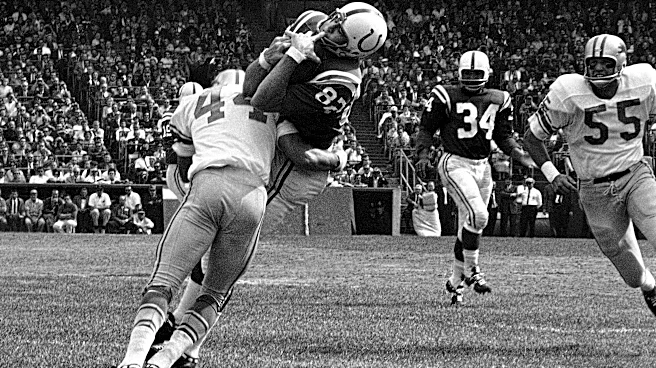
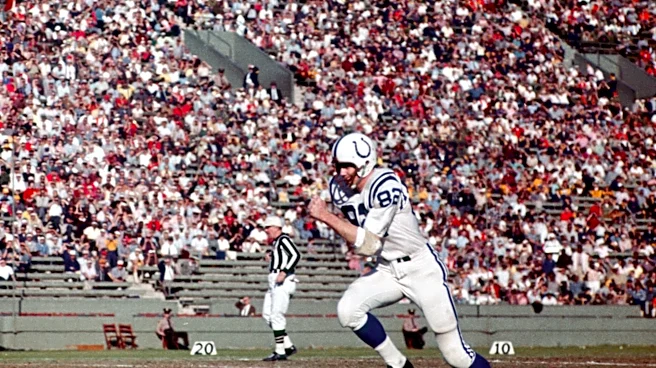
Raymond Berry, a legendary wide receiver for the Baltimore Colts and a member of the Pro Football Hall of Fame, has died at the age of 93. Berry passed away peacefully on May 25, surrounded by his family. He played his entire 13-year career with the Colts from
1955 to 1967, winning NFL championships in 1958 and 1959. Berry was known for his exceptional skills, being a six-time Pro Bowler and a three-time First Team All-Pro. He led the NFL in receptions and receiving yards multiple times and was part of the NFL's 1950s All-Decade Team. After retiring, Berry transitioned to coaching, eventually becoming the head coach of the New England Patriots, where he led the team to its first Super Bowl appearance in 1985.
Why It's Important?
Raymond Berry's passing marks the end of an era for the NFL, as he was one of the most influential players of his time. His contributions to the game, both as a player and a coach, have left a lasting impact on the sport. Berry's career set a standard for wide receivers, and his coaching tenure with the Patriots helped shape the franchise's future success. His legacy is a testament to his skill, dedication, and influence in professional football, inspiring future generations of players and coaches.
What's Next?
The NFL community is likely to honor Berry's legacy through tributes and memorials, celebrating his contributions to the sport. The Pro Football Hall of Fame and the Baltimore Colts organization may organize events to commemorate his life and career. Fans and former teammates will likely share memories and stories, highlighting Berry's impact on and off the field. His passing may also prompt discussions about the evolution of the wide receiver position and the historical significance of his achievements.
Beyond the Headlines
Raymond Berry's career highlights the evolution of the NFL and the role of wide receivers in the game. His ability to excel despite being drafted in the 20th round underscores the importance of talent and perseverance. Berry's coaching career, particularly his leadership of the Patriots to their first Super Bowl, reflects the broader narrative of the NFL's growth and the increasing competitiveness of the league. His life story serves as an inspiration, illustrating the potential for success regardless of initial expectations.