






What's Happening?
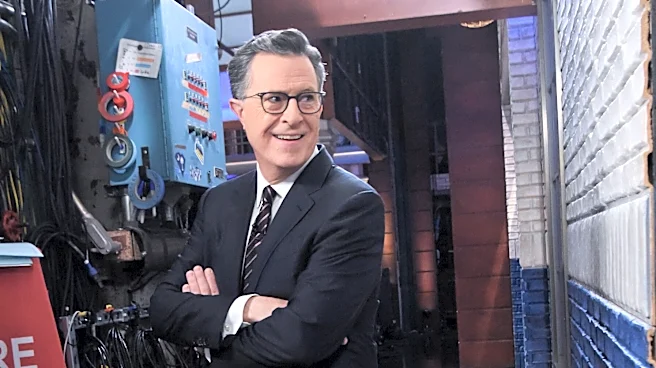
Stephen Colbert's exit from 'The Late Show' marks a significant shift in the late-night television landscape. Colbert, known for his strong interviewing skills and comedic talent, was one of the last remaining major late-night hosts. His departure highlights
the declining number of traditional late-night talk shows, as audiences increasingly turn to streaming services and on-demand content. The late-night format, once a staple of network television, is facing challenges as networks reconsider the profitability and relevance of these shows. NBC's 'Saturday Night Live' remains an exception, maintaining its relevance through a unique blend of live broadcasts and sketch comedy. However, the overall trend suggests a move away from traditional late-night programming.
Why It's Important?
The decline of traditional late-night shows reflects broader changes in media consumption habits. As viewers shift towards streaming platforms, the demand for scheduled programming diminishes. This transition impacts network television's ability to generate revenue from late-night slots, traditionally seen as lucrative. The departure of prominent hosts like Colbert could lead to a reevaluation of content strategies by networks, potentially affecting advertising revenue and the types of shows produced. The shift also opens opportunities for new formats and platforms to emerge, potentially reshaping the entertainment industry landscape.
What's Next?
With Colbert's departure, CBS has opted to fill the 'Late Show' slot with Byron Allen's 'Comics Unleashed,' a low-budget comedy showcase. This decision indicates a shift towards cost-effective programming, potentially setting a precedent for other networks. The future of late-night television may involve more diverse and innovative formats, as networks experiment with new content to attract audiences. The industry will likely see increased competition from streaming services, which offer flexibility and a wide range of content options. The evolution of late-night TV will depend on how networks adapt to changing viewer preferences and technological advancements.