





What's Happening?
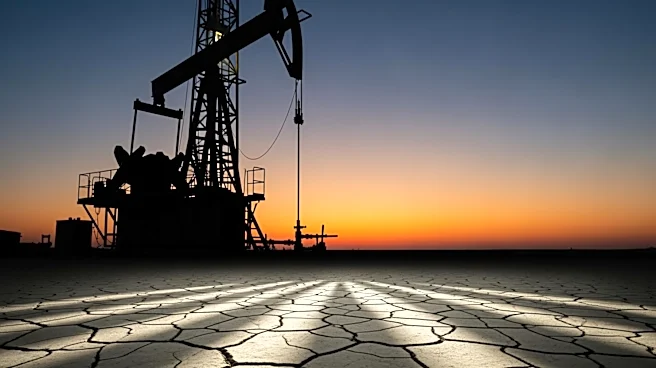
Diamondback Energy, Inc. is ramping up its oil production in the Permian Basin in response to a significant shift in the global oil market from a surplus to a deficit. This change is attributed to recent supply disruptions that have reduced global production by
over 8 million barrels per day in March, with further declines in April. The company is addressing this by working through its inventory of drilled but uncompleted wells to maintain production levels above 520,000 barrels of oil per day, which is about 3% higher than its original 2026 guidance. Diamondback plans to support this increase by deploying five completion crews for the rest of the year and adding two to three rigs to sustain future activities.
Why It's Important?
The decision by Diamondback Energy to boost production is significant as it reflects the broader challenges and opportunities within the U.S. shale industry. With global oil prices rising due to supply shortages, U.S. producers like Diamondback are positioned to capitalize on higher prices. This move could enhance the company's revenue and market position while contributing to stabilizing the global oil supply. However, it also highlights the ongoing tension between maintaining capital discipline and seizing market opportunities, a balance that many U.S. shale producers must navigate. The increased production could also have implications for U.S. energy independence and economic stability, particularly in the context of geopolitical tensions affecting global oil supply.
What's Next?
Diamondback's strategy to increase production may prompt other U.S. shale producers to follow suit, potentially leading to a broader increase in U.S. oil output. This could help mitigate global supply shortages and stabilize prices. However, the company and the industry at large will need to monitor geopolitical developments and market conditions closely to adjust their strategies accordingly. Additionally, the environmental impact of increased shale production may attract scrutiny from regulatory bodies and environmental groups, potentially influencing future policy and operational decisions.