



What's Happening?
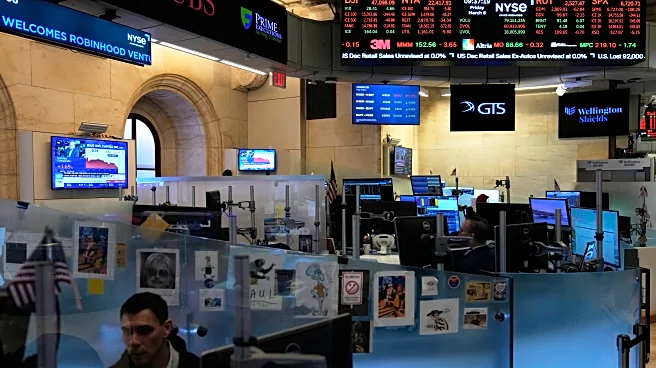
Traders and analysts are closely monitoring the upcoming release of the February consumer inflation report, which is expected to be a significant factor in shaping Federal Reserve policies and market directions. Economists anticipate a 0.3% month-over-month
increase in the consumer price index (CPI) and a 2.4% year-over-year rise. Excluding food and energy, the CPI is expected to grow by 0.2% month-over-month and 2.5% year-over-year. The recent jobs report, which showed a decline of 92,000 payrolls instead of the expected increase, has heightened the stakes for the CPI data. Market experts are divided on the potential impact, with some predicting a negative market reaction even if the CPI comes in below estimates. The report is seen as a critical indicator for the Federal Reserve's future actions, especially in a year marked by geopolitical tensions and technological disruptions.
Why It's Important?
The release of the inflation data is crucial as it could influence the Federal Reserve's monetary policy decisions, impacting interest rates and economic growth. A higher-than-expected CPI could lead to tighter monetary policies, affecting borrowing costs and consumer spending. Conversely, a lower CPI might signal economic slowing, prompting concerns about growth. The data also holds significance for investors, as it could affect stock market performance, particularly in sectors like technology and commodities. The outcome of the report could lead to shifts in investment strategies, with potential gains or losses for stakeholders depending on their market positions.
What's Next?
Following the release of the CPI data, market participants will likely adjust their strategies based on the Federal Reserve's response. If the inflation data is higher than expected, the Fed may consider more aggressive rate hikes, impacting sectors sensitive to interest rates. Conversely, a lower CPI could lead to a more cautious approach by the Fed, potentially stabilizing markets. Investors will also be watching for any geopolitical developments, such as the situation with Iran, which could further influence market dynamics. The coming weeks will be critical as stakeholders assess the economic landscape and adjust their positions accordingly.