
What's Happening?
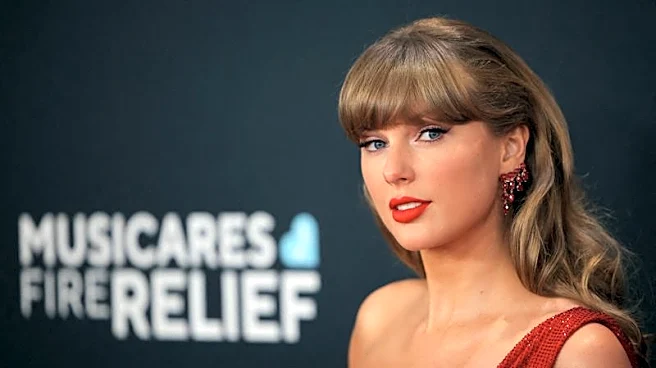
Taylor Swift has filed trademark applications to protect her voice and likeness, aiming to combat unauthorized use by AI technologies. The trademarks include sound marks for her voice and a visual trademark of
her image. This move follows similar actions by other celebrities, such as Matthew McConaughey, who have sought to safeguard their identities against AI-generated content. The trademarks are intended to provide legal recourse against the misuse of Swift's likeness and voice, which have been used without permission in various AI-generated contexts.
Why It's Important?
Swift's legal actions highlight growing concerns in the entertainment industry about the potential for AI to infringe on personal rights and intellectual property. As AI technology advances, the ability to replicate voices and images poses significant challenges to artists' control over their own identities. This case underscores the need for updated legal frameworks to address the unique issues posed by AI, ensuring that artists can protect their brand and creative output. The outcome of Swift's trademark applications could set a precedent for how similar cases are handled in the future.