
What's Happening?
The passenger car hub bearings market is experiencing steady growth as global automotive production rebounds. This growth is driven by increasing consumer demand for safer, smoother, and more efficient
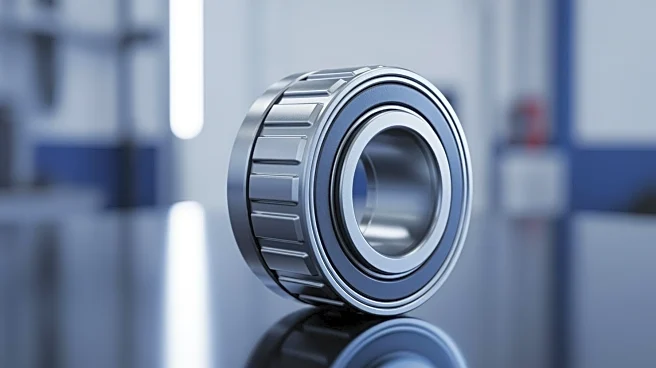
vehicles. Hub bearings, which are precision-engineered components, play a crucial role in supporting wheel rotation, reducing friction, and ensuring vehicle stability. They are essential for modern passenger cars that integrate advanced safety and comfort features. The market is influenced by trends such as the rising production of passenger vehicles, particularly in emerging economies, and the growing emphasis on vehicle safety and driving comfort. Additionally, the electrification of vehicles is impacting the market, as electric and hybrid vehicles require hub bearings that can handle higher torque and unique weight distributions.
Why It's Important?
The growth of the passenger car hub bearings market is significant for the automotive industry as it directly influences vehicle lifecycle costs and reliability. Smooth wheel operation, facilitated by high-quality hub bearings, reduces energy losses, improves fuel efficiency, and enhances driving comfort. This aligns with consumer expectations for high-quality mobility. As automotive manufacturers focus on optimizing total cost of ownership and meeting regulatory requirements, the demand for advanced hub bearing solutions is expected to strengthen. The market's expansion is also supported by the increasing production of passenger vehicles in emerging economies, which translates into higher demand for both original equipment and aftermarket hub bearings.
What's Next?
The future outlook for the passenger car hub bearings industry remains positive, with long-term growth expected due to global mobility trends and ongoing innovation in vehicle design. Regulatory frameworks focused on vehicle safety, emissions, and efficiency are likely to drive demand for advanced hub bearing solutions. Innovation in response to electrification and autonomous driving trends may lead to hub bearings incorporating sensors and connectivity features for real-time monitoring and predictive maintenance. These developments could enhance vehicle safety and reduce lifecycle costs. Manufacturers will need to address challenges related to cost pressures, supply chain resilience, and sustainability expectations to maintain growth.