



What's Happening?
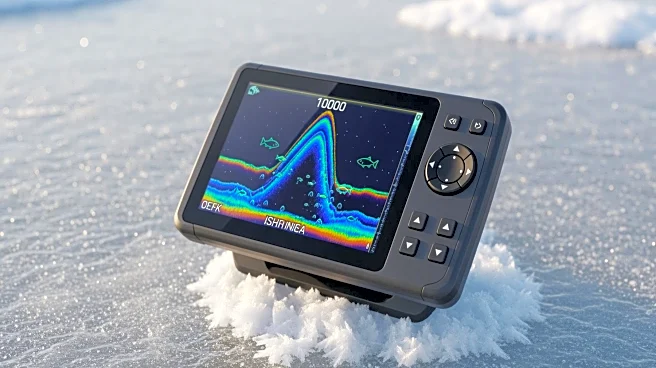
Ice fishing enthusiasts are increasingly relying on advanced fish finder technology to improve their angling experience. These devices use transducers with varying cone angles to provide detailed views of the underwater environment. Wide-angle transducers offer a broad view, ideal for shallow waters, while narrow-angle transducers minimize interference and are suited for fishing around structures. Medium-angle transducers provide a balanced view. The technology allows anglers to better understand the underwater terrain and locate fish more effectively, enhancing the overall fishing experience.
Why It's Important?
The use of advanced fish finder technology in ice fishing represents a significant shift in how anglers approach the sport. By providing detailed insights
into underwater environments, these devices enable more strategic fishing, potentially increasing catch rates and improving the efficiency of fishing trips. This technological advancement could lead to greater interest in ice fishing, attracting more participants and boosting related industries such as equipment sales and tourism in regions known for ice fishing. Additionally, it may influence the development of new fishing techniques and strategies.
What's Next?
As technology continues to evolve, further advancements in fish finder devices are expected. Manufacturers may develop more sophisticated models with enhanced features, such as multi-cone transducers for even more detailed underwater mapping. This could lead to increased competition among brands, driving innovation and potentially lowering costs for consumers. Anglers may also see improvements in user interfaces and integration with other fishing technologies, such as GPS and mobile apps, making the sport more accessible and enjoyable.
Beyond the Headlines
The integration of technology into traditional sports like ice fishing raises questions about the balance between skill and reliance on devices. While technology can enhance the experience, it may also diminish the traditional aspects of the sport, such as intuition and manual skill. This shift could lead to discussions within the fishing community about the role of technology in preserving the essence of the sport. Additionally, there may be environmental considerations regarding the impact of increased fishing activity facilitated by technology.