



What's Happening?
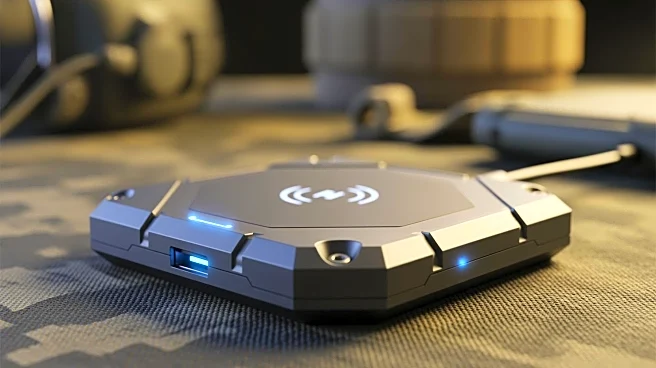
Bunker Supply, a U.S. company, has introduced a new wireless charging module as part of its Mission Awareness Accessory Kit (MAAK) ecosystem. This development was announced at the SAE Media Group Future Soldier Technology conference in London. The module is designed
to integrate with the company's Forge case, which is compatible with various military end user devices (EUDs) such as phones and tablets. The Scout battery module, a key component, is an IP67-rated lithium-ion battery that offers a 75 W output through two USB-C ports and a Qi2 wireless charger. This setup allows the device to be powered while keeping the USB port available for other connections, such as radios or central hubs. Additionally, Bunker Supply has developed a low-temperature kit for cold-weather operations, featuring a heating pad that connects to the Scout module, ensuring functionality in extreme conditions.
Why It's Important?
The introduction of this wireless charging module is significant for military operations, as it enhances the efficiency and effectiveness of soldiers in the field. By reducing the need for separate batteries and minimizing cabling, the module lightens the load for soldiers, allowing for greater mobility and ease of use. This innovation supports the military's ongoing efforts to modernize and streamline equipment, ensuring that personnel can maintain communication and operational capabilities in various environments. The ability to operate in cold weather with the low-temperature kit further extends the utility of the devices, making them reliable in diverse climates and conditions.
What's Next?
As Bunker Supply rolls out this new technology, military units are likely to begin integrating the wireless charging module into their standard equipment. This could lead to further developments in military technology, focusing on reducing the physical burden on soldiers while enhancing their operational capabilities. The success of this module may prompt other companies to innovate similar solutions, potentially leading to a broader adoption of wireless charging technologies in military applications. Additionally, feedback from field use could drive further refinements and improvements to the system.