
What's Happening?
Cowboy Space Corporation, formerly known as Aetherflux, has successfully raised $275 million in a Series B funding round led by Index Ventures, with contributions from Breakthrough Energy Ventures, Construct
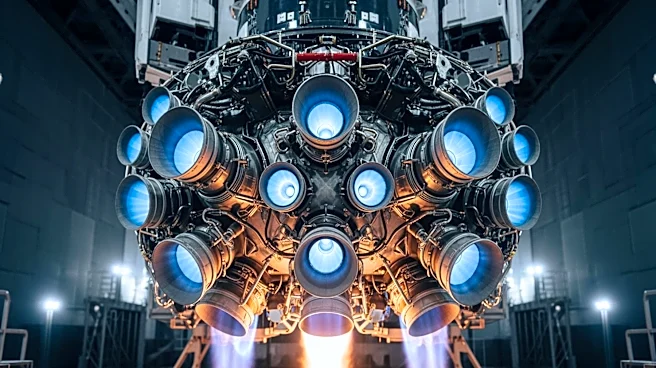
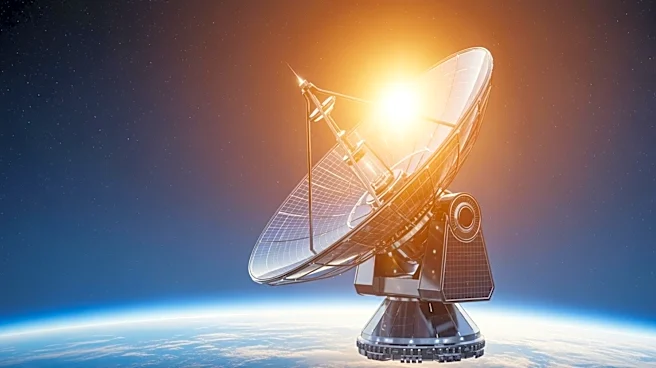
Capital, and IVP. The company, valued at $2 billion, is pivoting its business model to focus on space-solar-power, orbital data centers, and launch vehicles. This strategic shift includes the development of a small-satellite constellation to collect solar power in space and deliver it to Earth via infrared lasers. Additionally, Cowboy Space is designing a unique rocket that integrates its upper stage with a data center, providing dedicated space access amid strained launch capacities. The company plans to launch its first satellite this year, with a rocket launch anticipated by the end of 2028.
Why It's Important?
This development is significant as it highlights the growing interest and investment in space-based technologies, particularly in the realm of renewable energy and data management. Cowboy Space's innovative approach to integrating data centers with launch vehicles could revolutionize how data is processed and managed in space, offering new opportunities for industries reliant on data storage and processing. The successful funding round underscores investor confidence in the potential of space-solar-power as a viable energy solution, which could have far-reaching implications for energy sustainability and technological advancements. The company's focus on controlling the economics of space access also reflects a strategic move to mitigate current challenges in launch capacity.
What's Next?
Cowboy Space plans to demonstrate its space-to-Earth power beaming capabilities with the launch of its first satellite. The company is also working towards launching its first rocket by the end of 2028, which will serve as both a launch vehicle and an orbital data center. As the company progresses, it may face regulatory and technical challenges associated with space operations and energy transmission. Stakeholders, including investors and potential partners, will likely monitor the company's advancements closely, as successful implementation could lead to further investments and collaborations in the space technology sector.